a visit to the Felix Topolski archives unit4 fmp

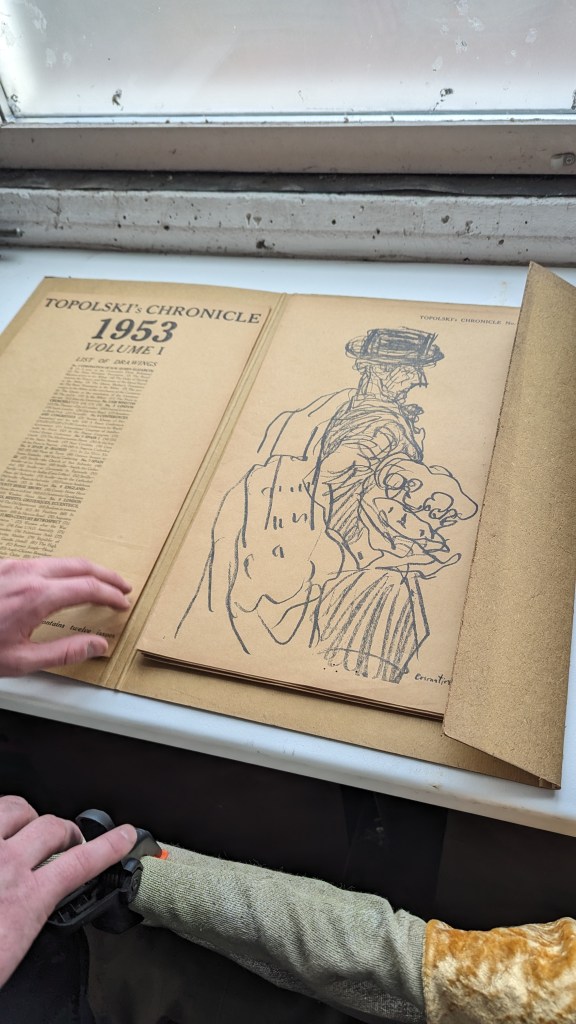
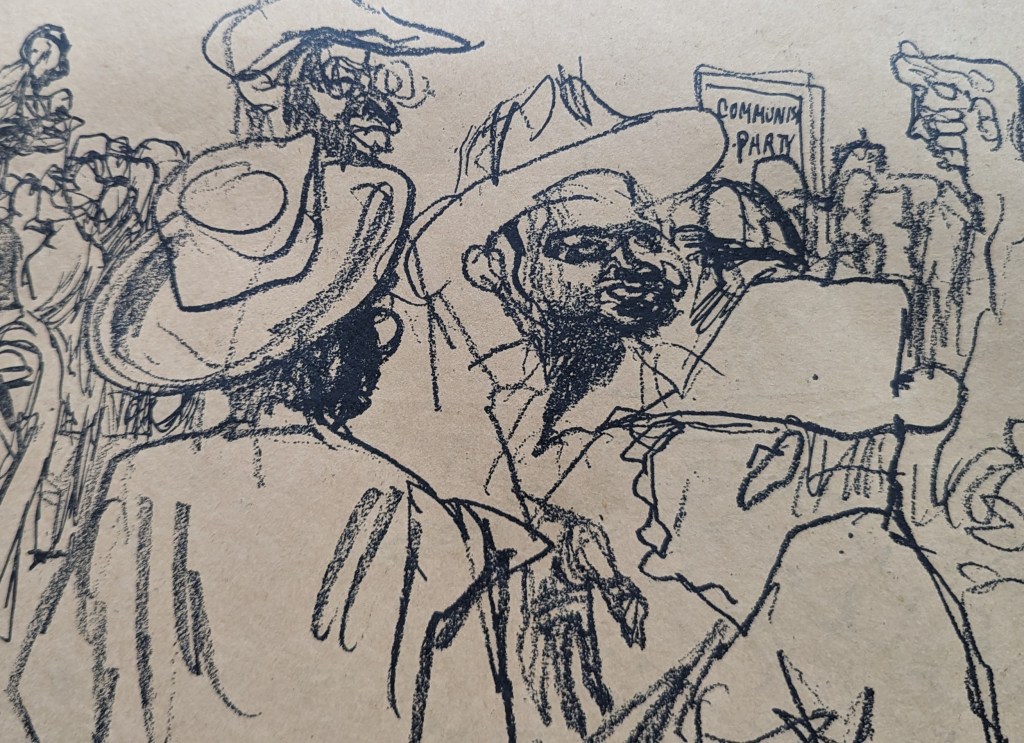
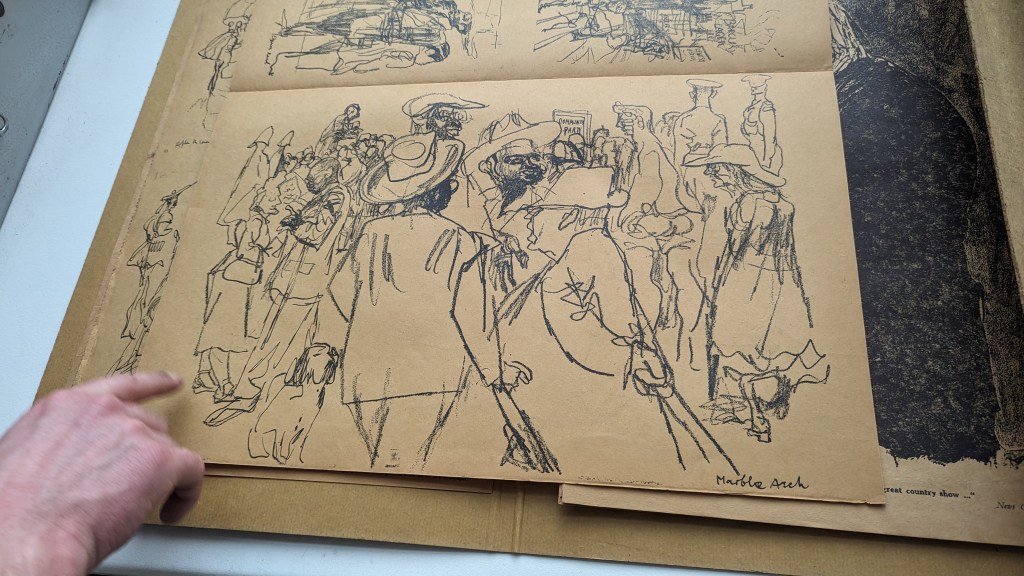
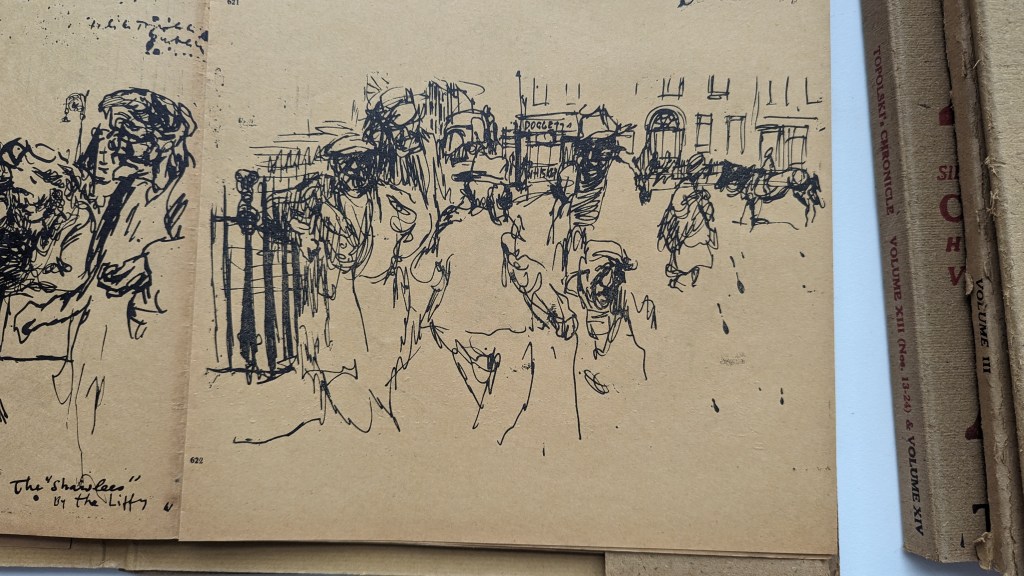
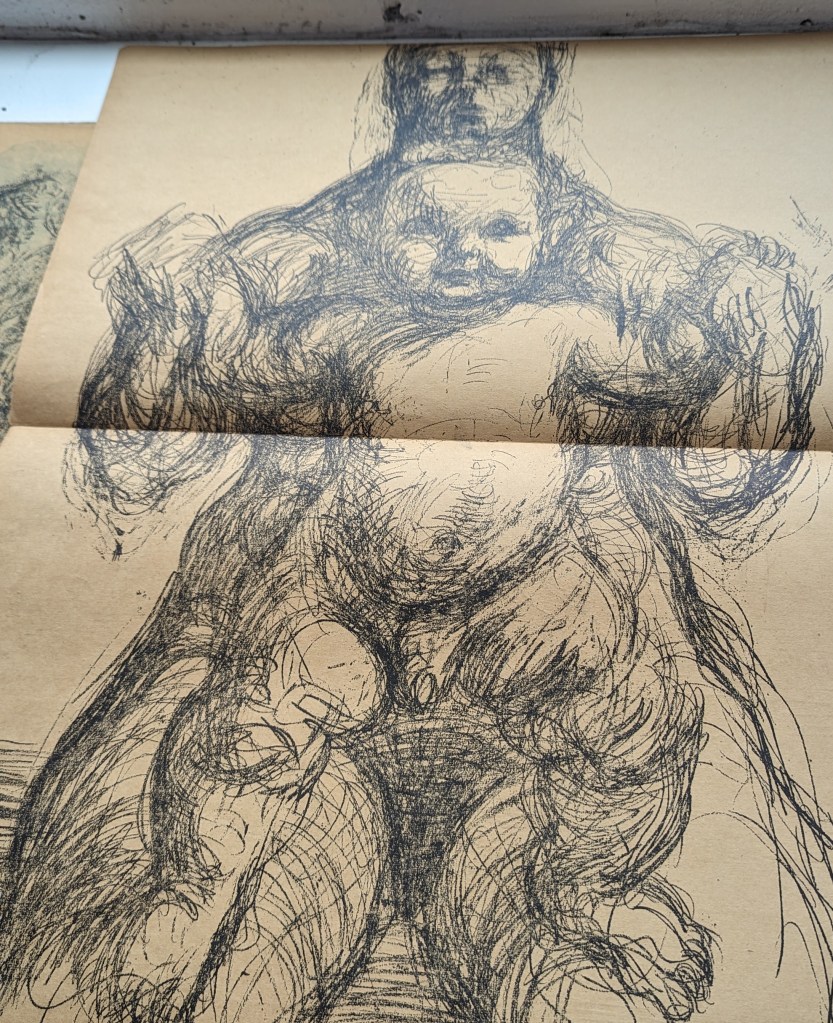
the Topolski archives are kept in Felix Topolski’s former studio a railway arch by Waterloo station.

Felix Toploski RA 1907-1989 was an expressionist artist, and more famously an illustrator and draftsman o, Born in Poland and working in London from his early 30’s Topolski’s easy line, dynamic curiosity and energy led him into a important chronicllor of the 20th Century.

Liberation of rome, June 1944 private collection

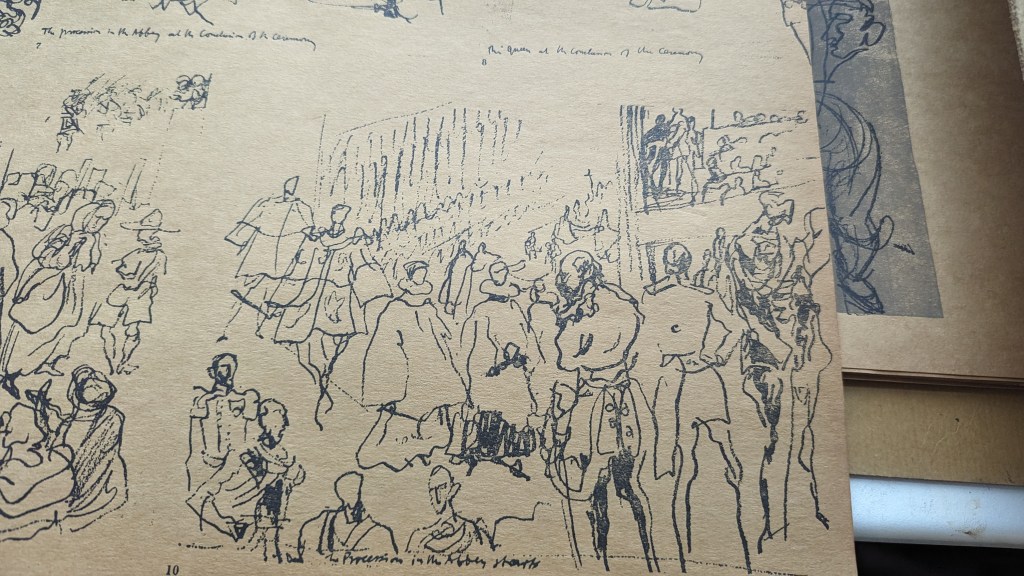
As an offical war artist toploski travelled on eastern western fronts, and was a witness to the liberation of Belsen concentration camp.after drawing the Queens coronation for the Polsih Government, Topolski began a a fortnightly print that became an annual ” Topolski’s Chronicles” from 1954 till his death

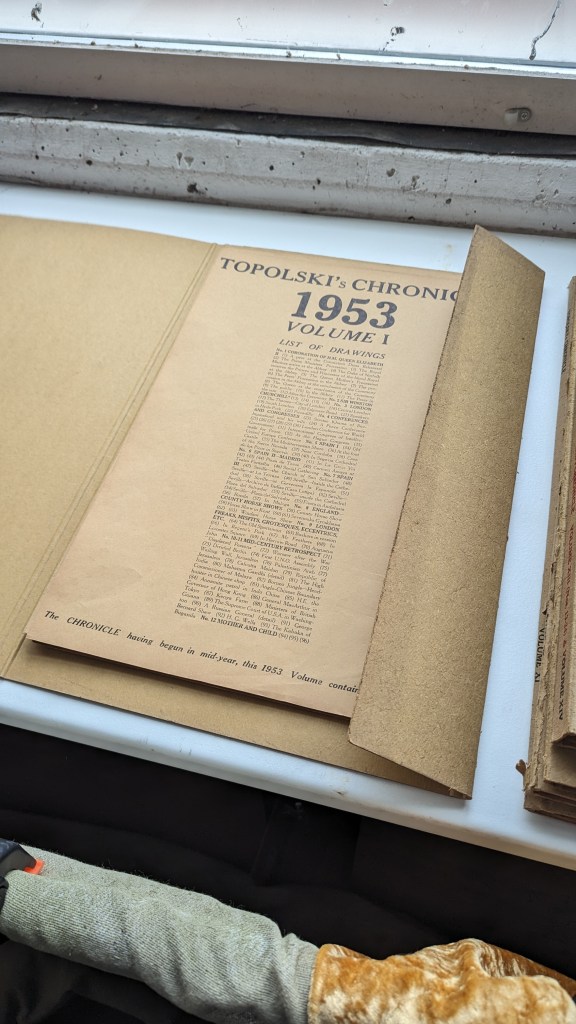
in Volume 1 Topolski set out his agenda
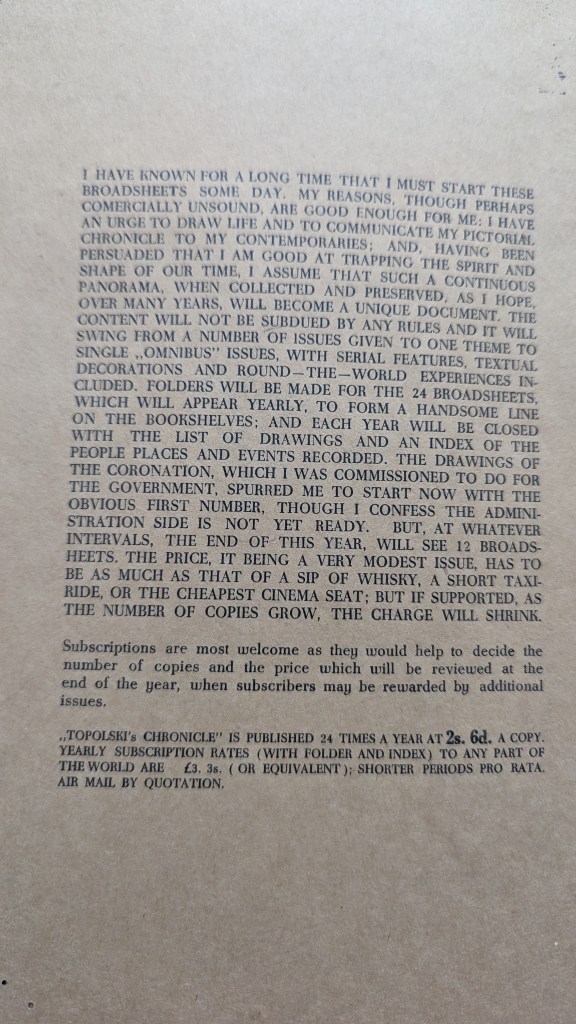
I HAVE KNOWN FOR A LONG TIME THAT I MUST START THESE BROADSHEETS SOME DAY. MY REASONS, THOUGH PERHAPS COMERCIALLY UNSOUND, ARE GOOD ENOUGH FOR ME: I HAVE AN URGE TO DRAW LIFE AND TO COMMUNICATE MY PICTORIAL CHRONICLE TO MY CONTEMPORARIES; AND, HAVING BEEN PERSUADED THAT I AM GOOD AT TRAPPING THE SPIRIT AND SHAPE OF OUR TIME, I ASSUME THAT SUCH A CONTINUOUS PANORAMA, WHEN COLLECTED AND PRESERVED, AS I HOPE, OVER MANY YEARS, WILL BECOME A UNIQUE DOCUMENT. THE CONTENT WILL NOT BE SUBDUED BY ANY RULES ………
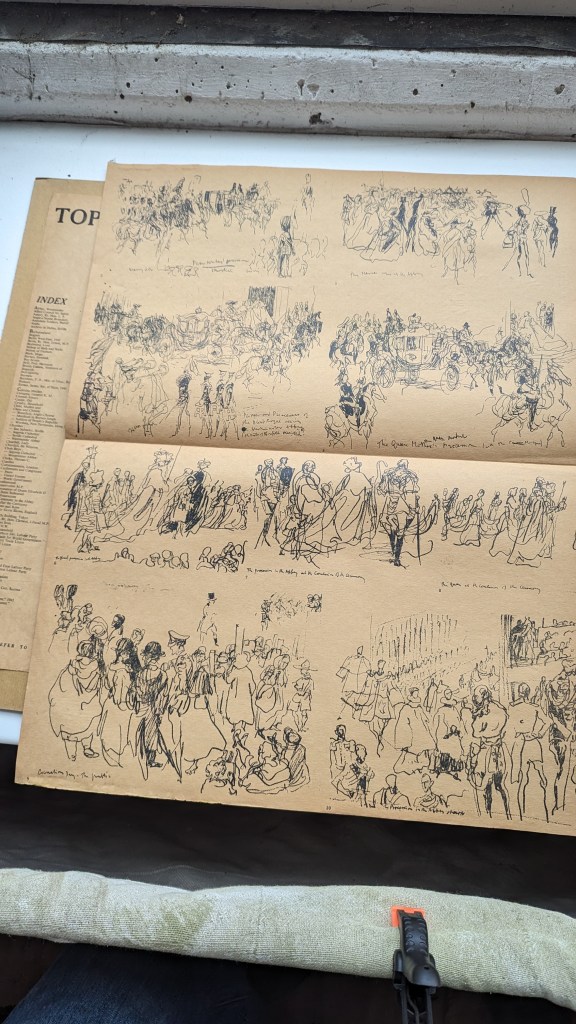
queens coronation from Vol 1, topolskis chronicles

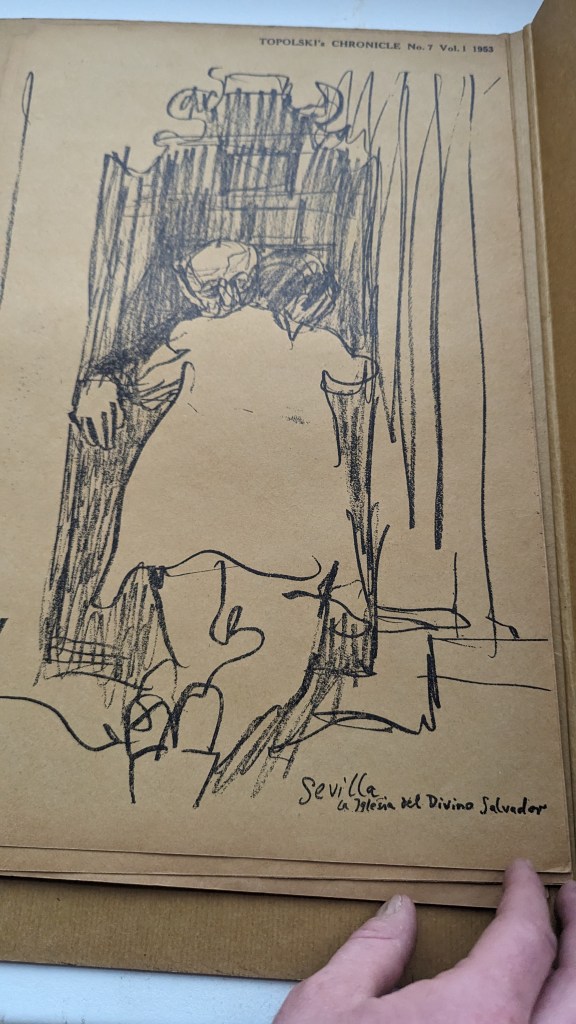
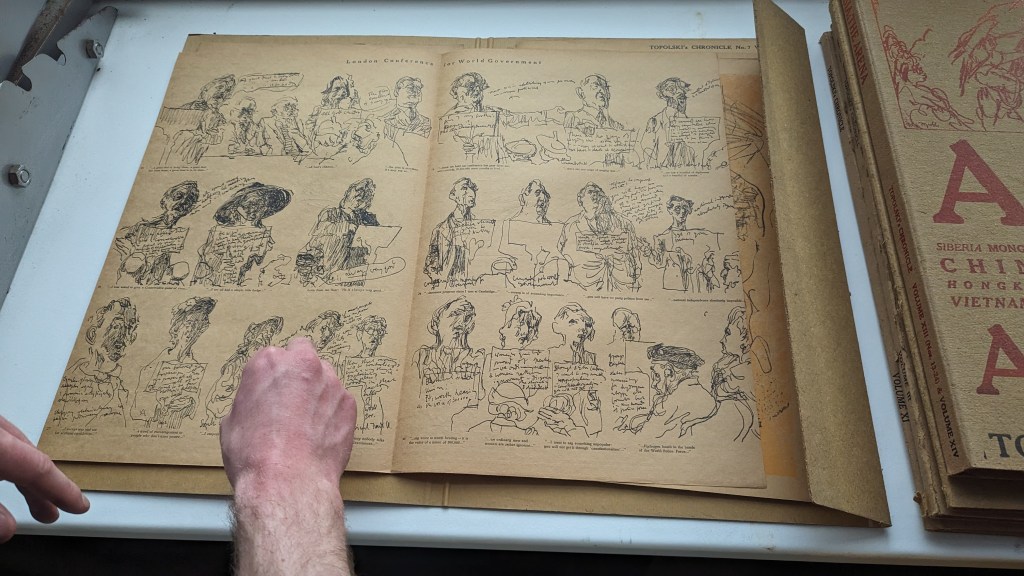
Topolski’s fast line and easy to recognise style made him a popular illustrator in the 60’s and 70’s

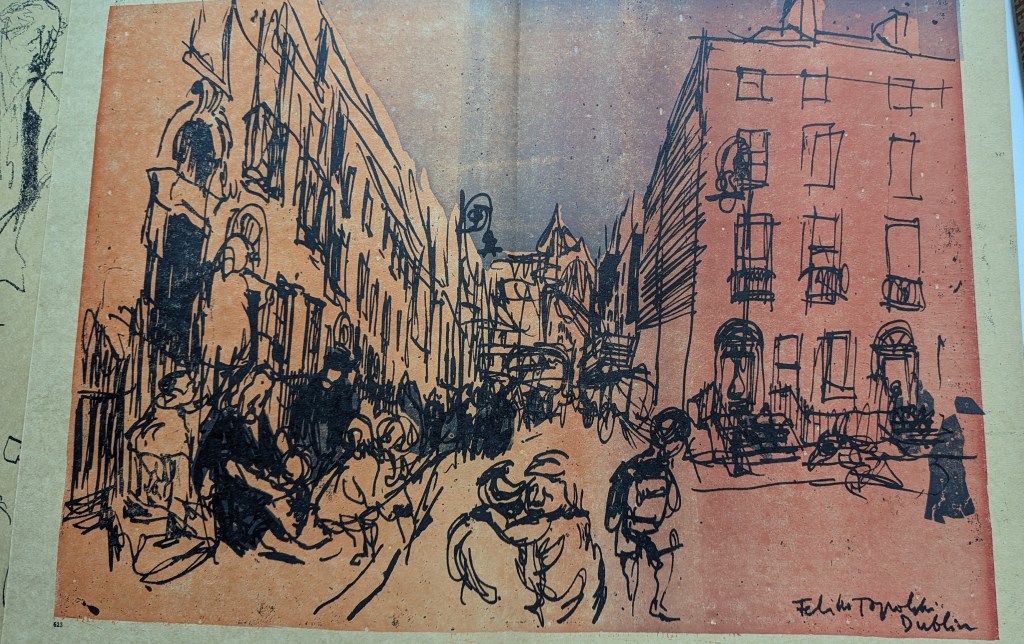
topolski’s wife and daniel, and illustrations of dublin shows that his rapid pen ibelongs to more than a cartoonist

Topolski’s work has fallen out of favour as the life he captured and the brillaint portraits he made are ignored, as the life of Britain in the 60s and 70s are forgotten.

I visited hte Topolski archives as I love his line and his rapid style of drawing, how in seemingly chaotic lines he forms a coherent form. I am also interest in how he used his art to report, and as a former reporter I hope to be able to capture life with my pencil and pen
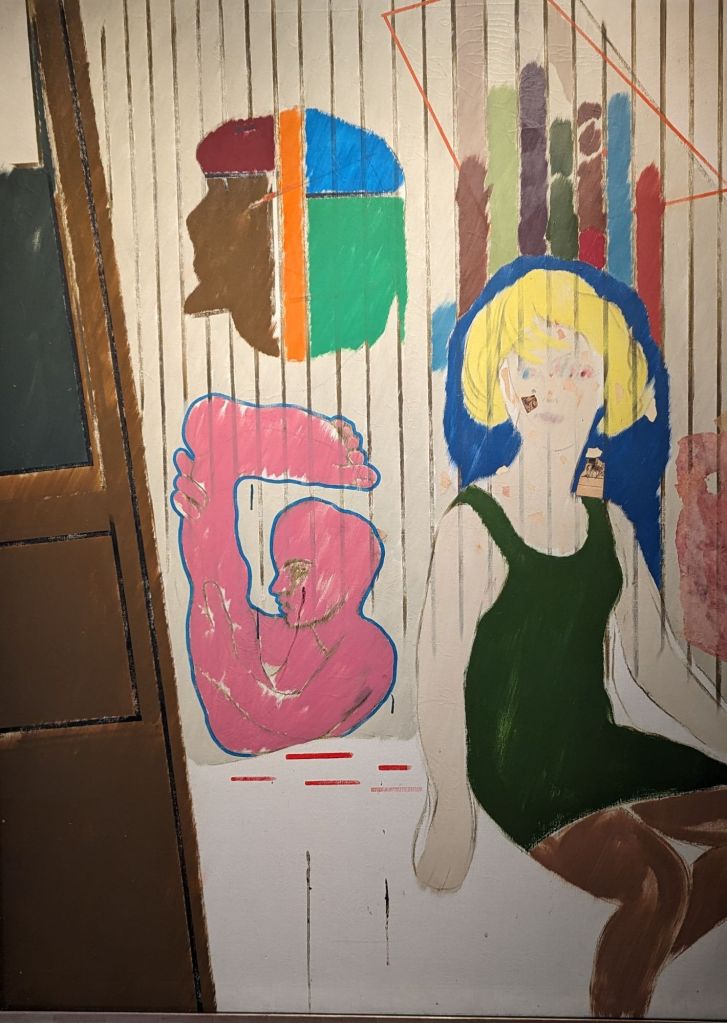
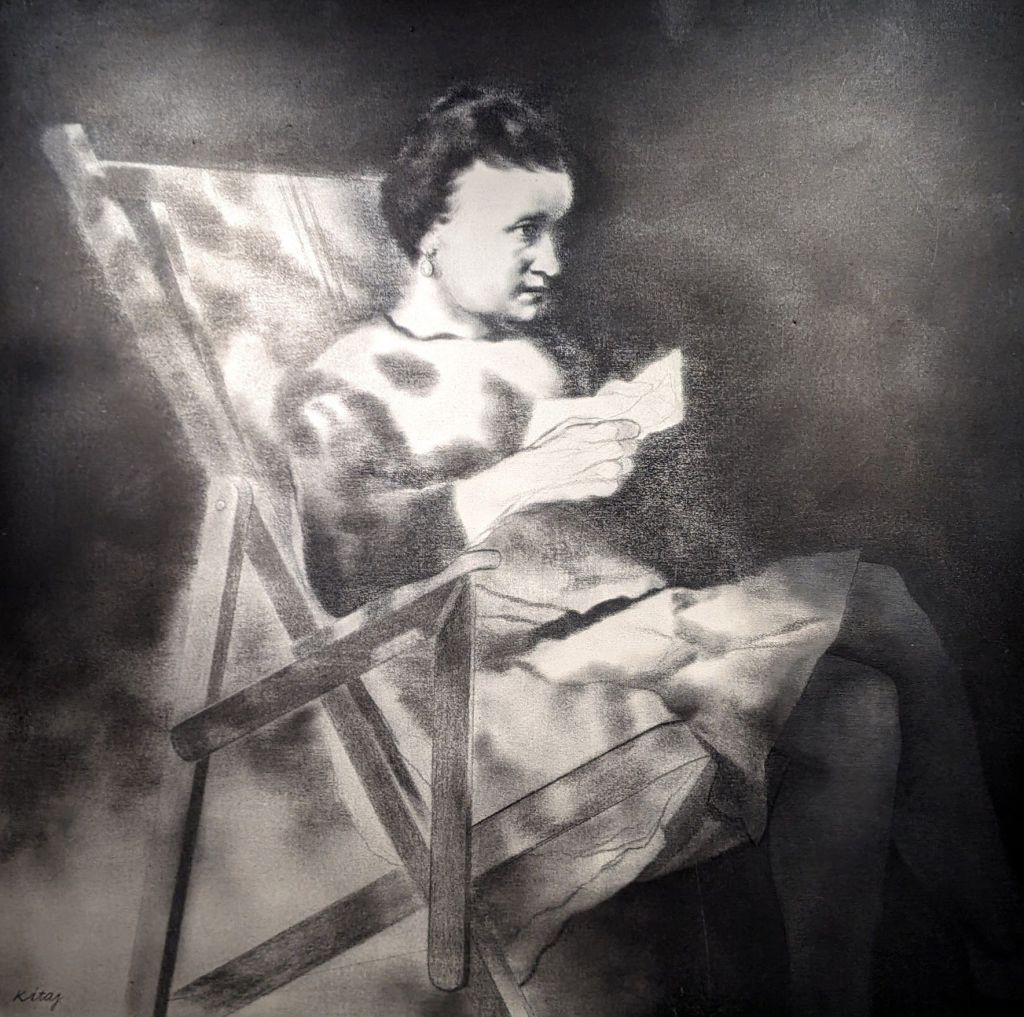
R B Kitaj at Piano Nobile Gallery

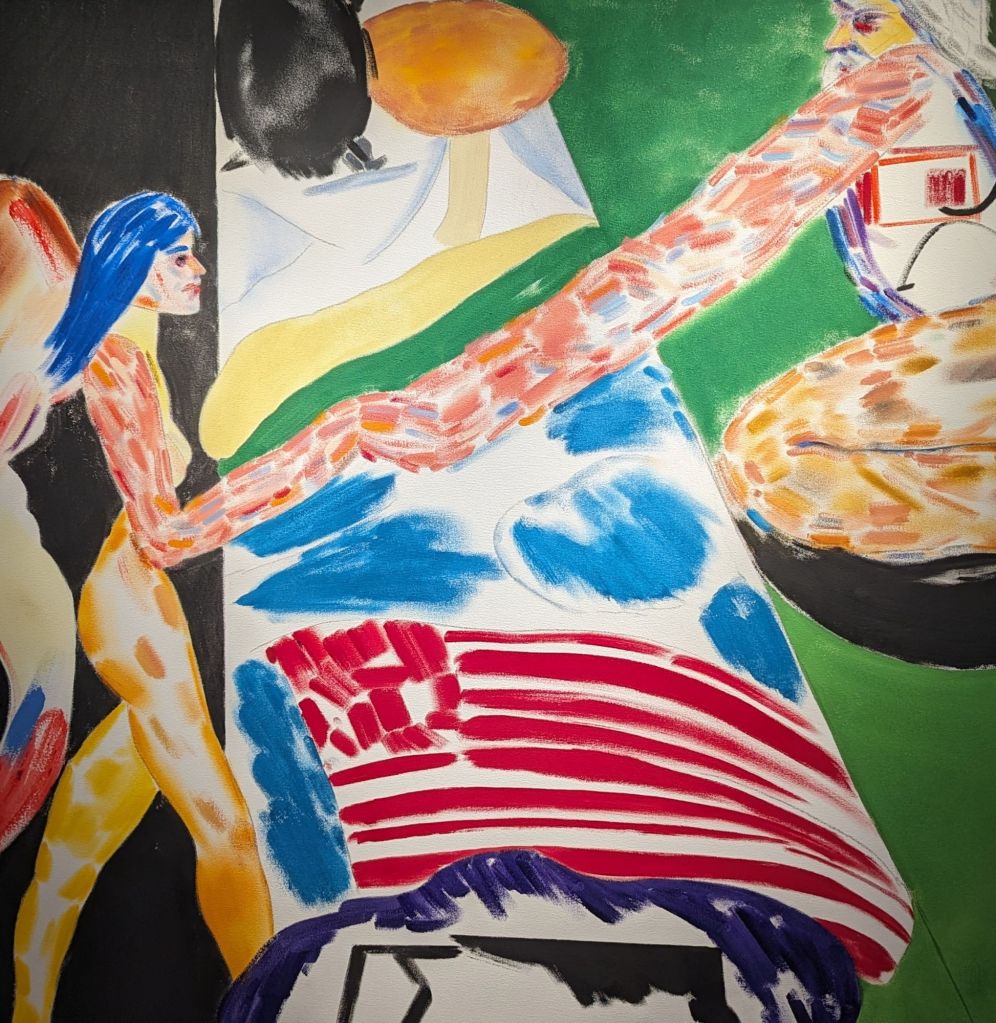
R V Kitaj 1932-2007 an American artist born in Ohio , his Eastern Europe Jewish roots became a vital identifier in later life.
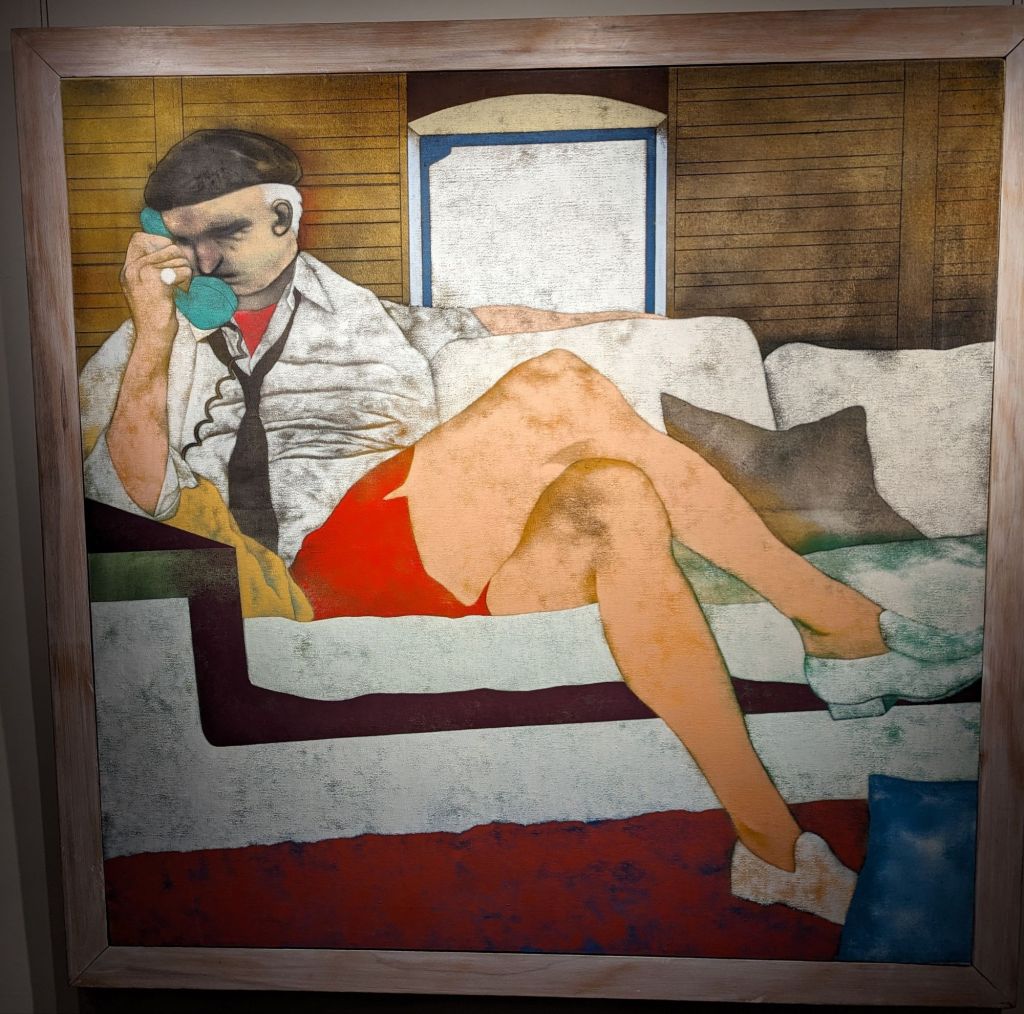
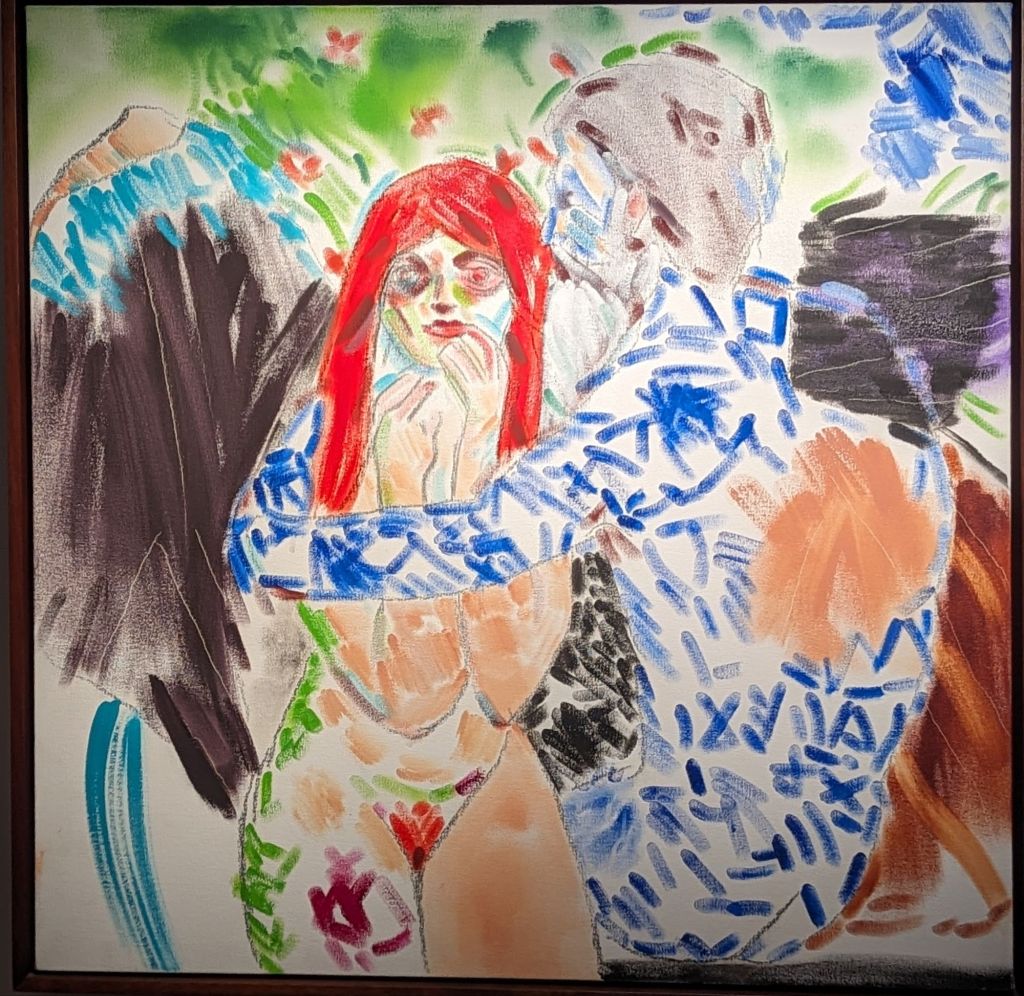
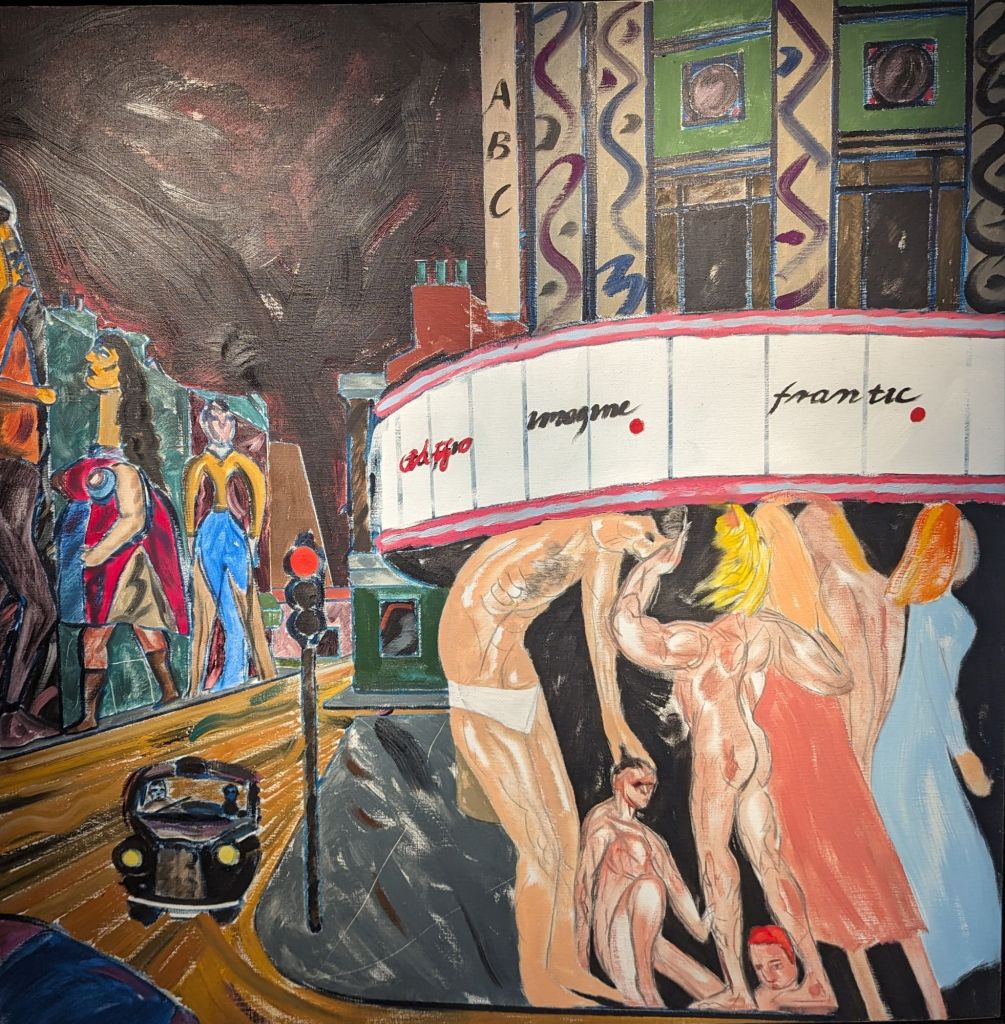
A superb draftsman, he studied drawing in Vienna, New York, Oxford . His tutors claimed direct teaching credentials from Degas, Cezanne, Ingres, Poussin. In the early 60’s Kitaj studied at the RCA, a contemporary of Hockney , they maintained a life time friendship and working relationship. Until 97, Kitaj worked in Britain, considered with Hockney, Blake, Pazolli the vanguard British Pop Art, a title he rejected, calling them New British Art. He was a polymath and an energetic art theorist, exploring identity,

Welcome every dread delight, 1962, showing influnces of collage screen printing, thin underpainting and astonishing colours.

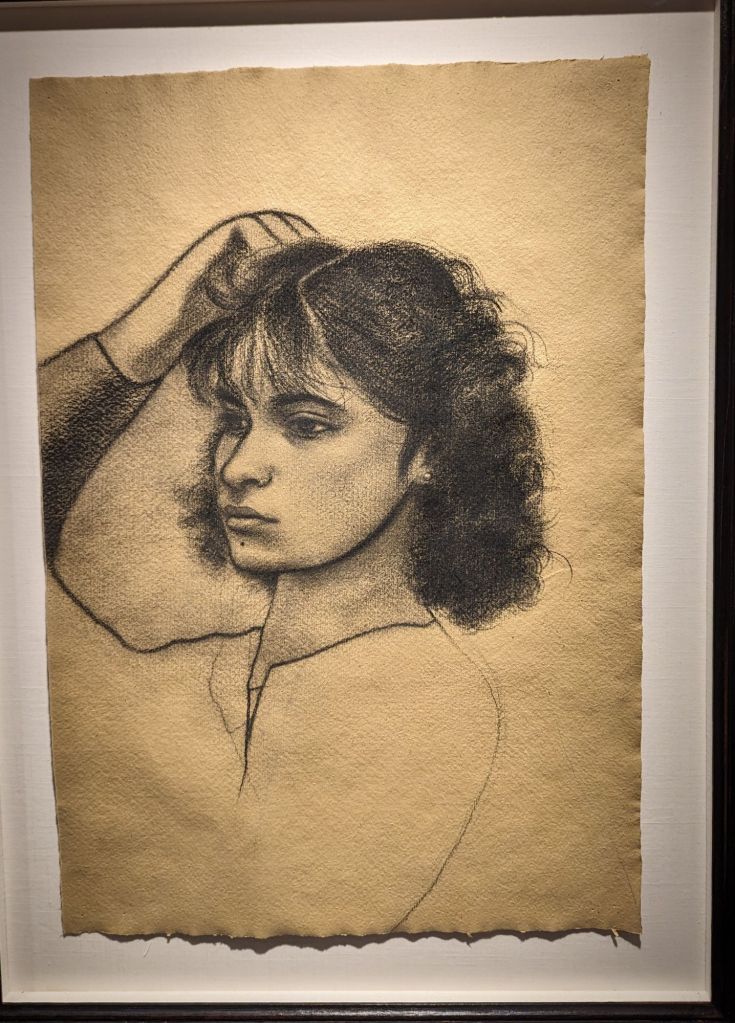
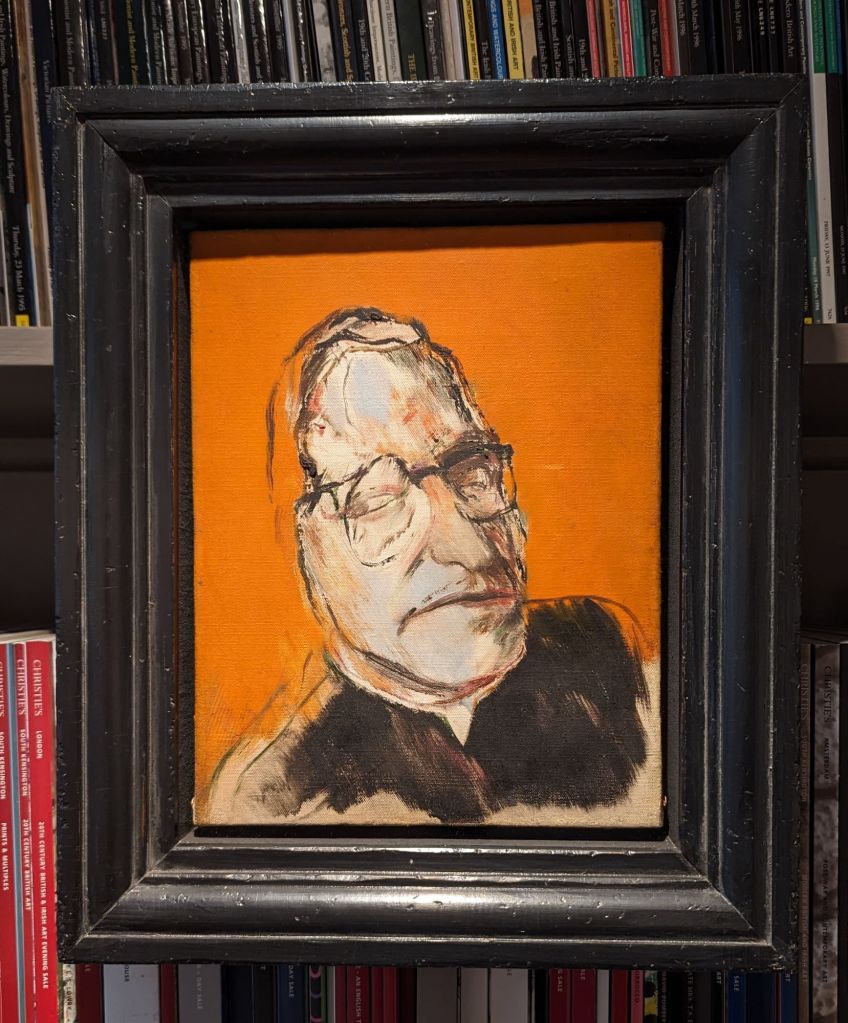
an accomplished portraitist, here one of the many charcoal drawings of his daughter and mother, Kitaj worked and reworked his drawings, aided by an extraordinary paper card he discovered with Hockney ‘porridge paper’

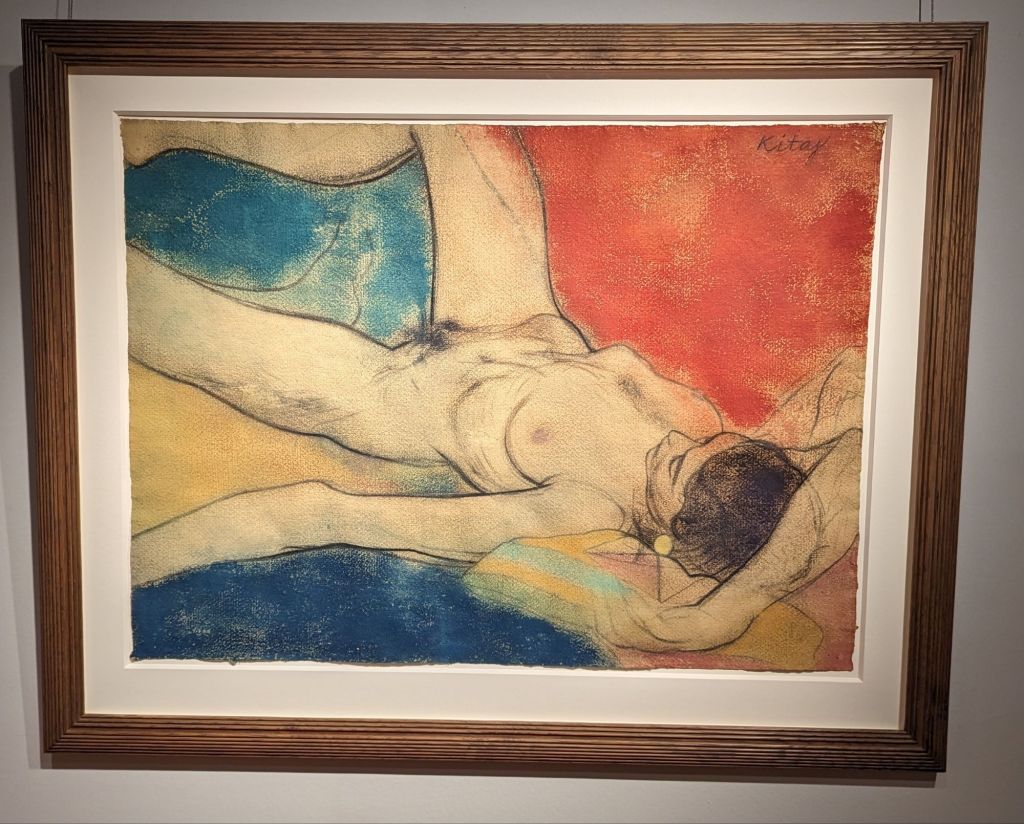
nude and secret jew, Kitaj as the perfect draughtsman, using layers of thin paint.

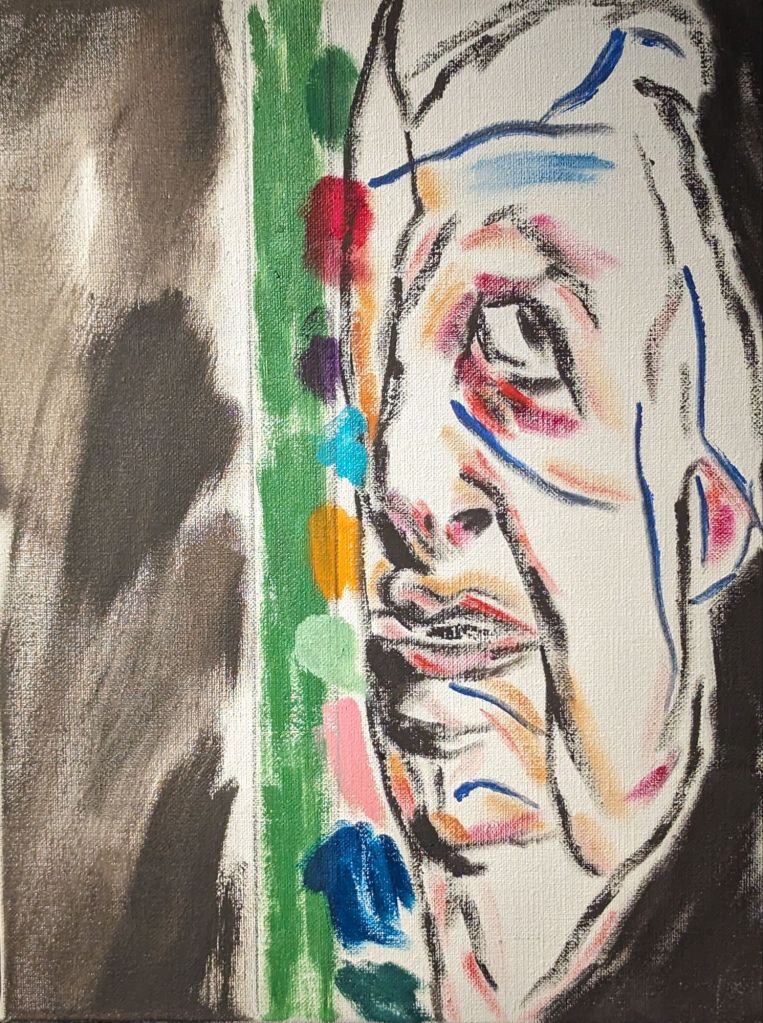
in the 1990’s following a heavily criticised retrosepctive at the Tate, and the death of his second wife, Kitaj , deeply depressed, left the UK for California. His later expressive paintings and portraits show a freedom from his classical constraints. He died in 2007

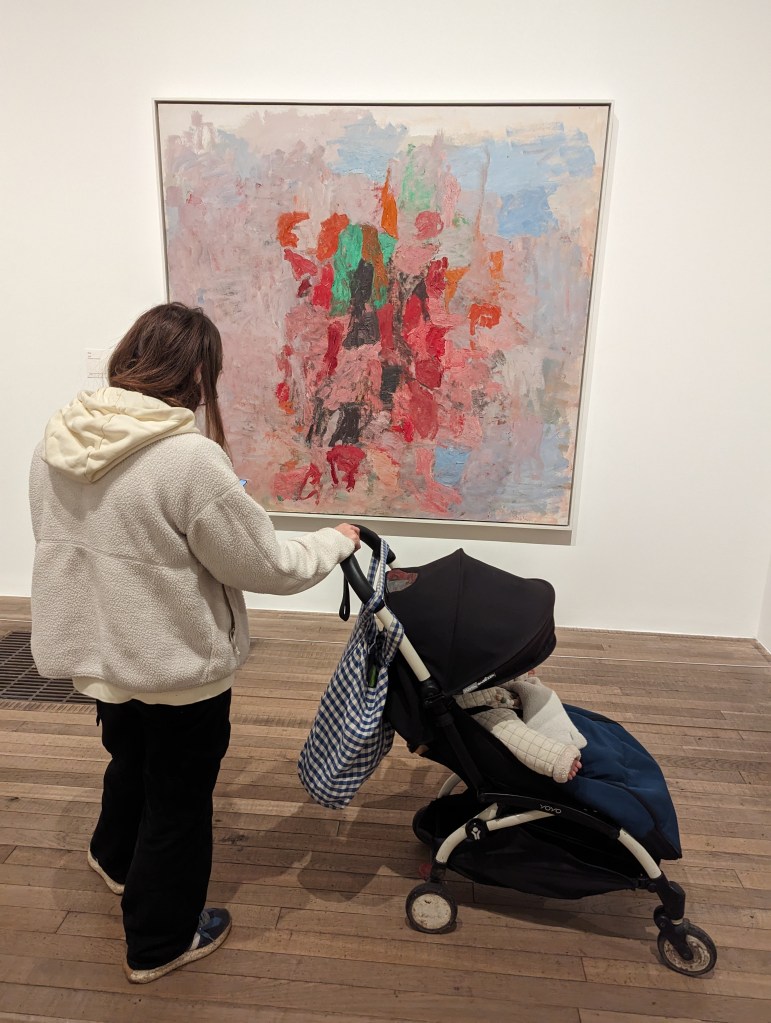
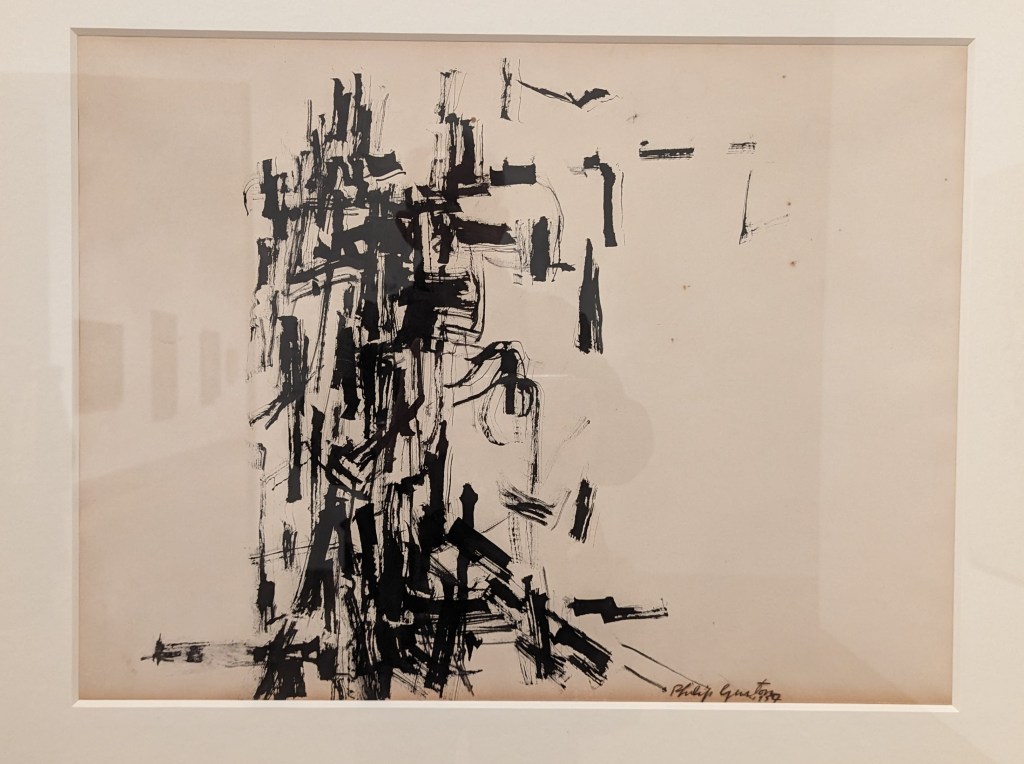
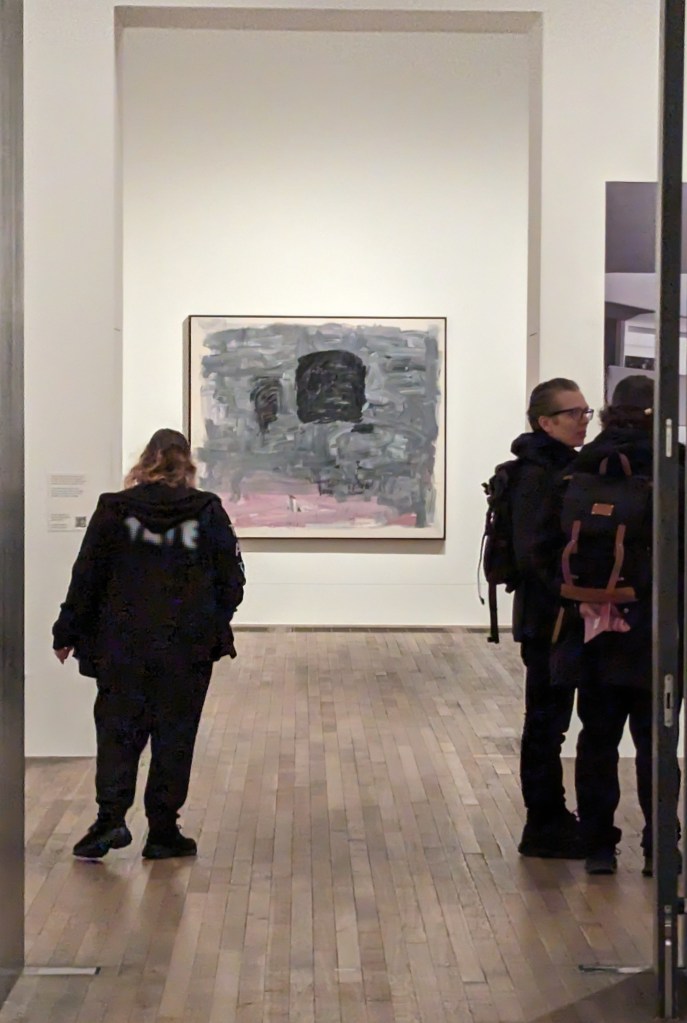
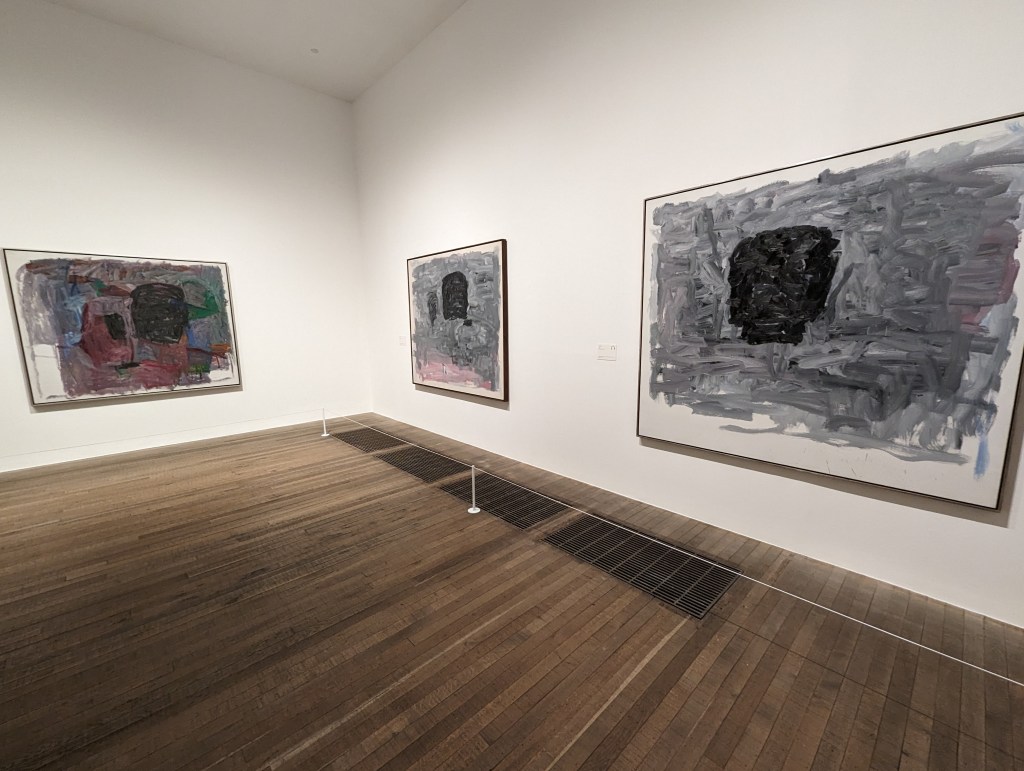
the 3 Philip Gustons at the Tate

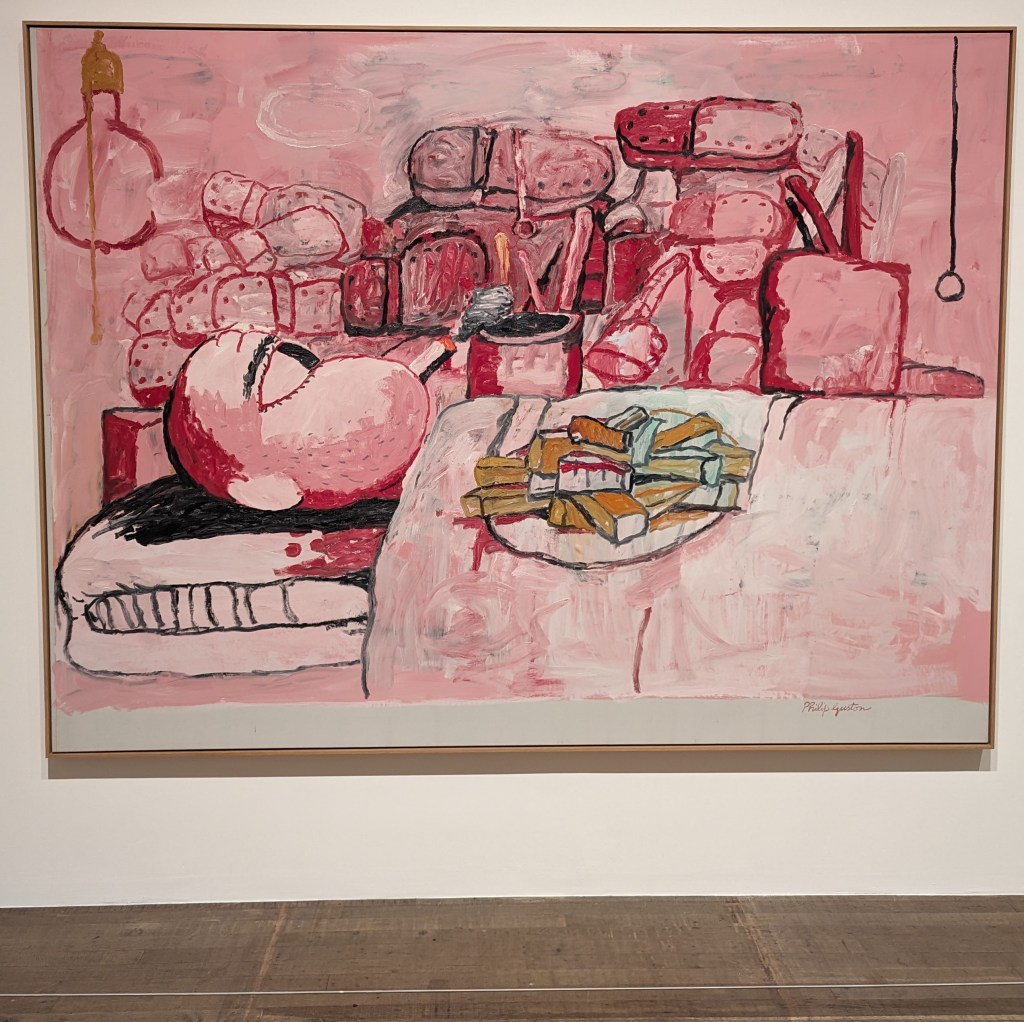
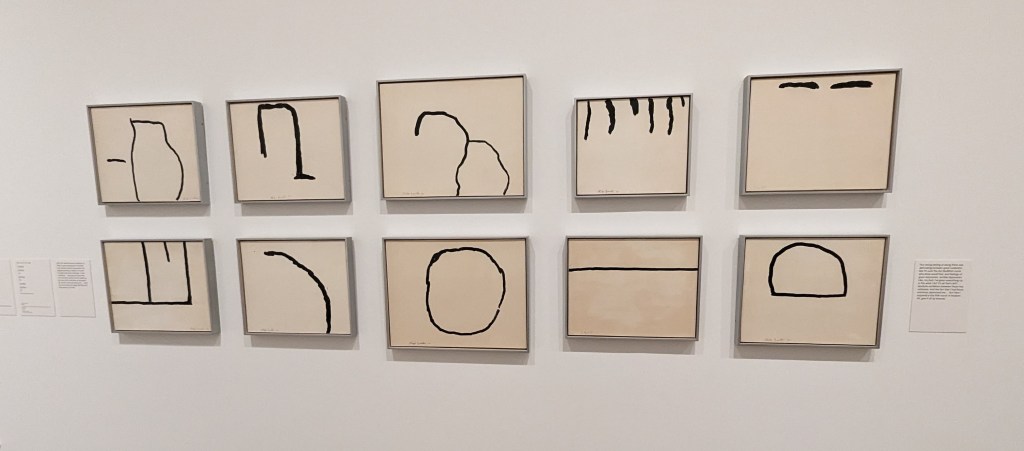
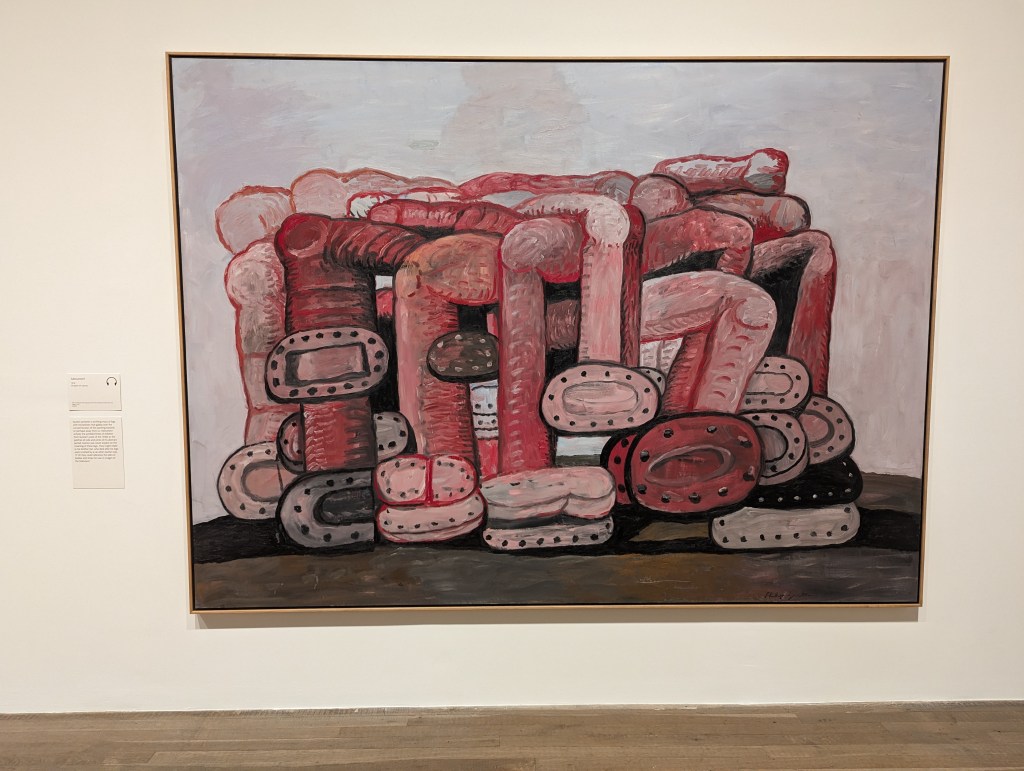
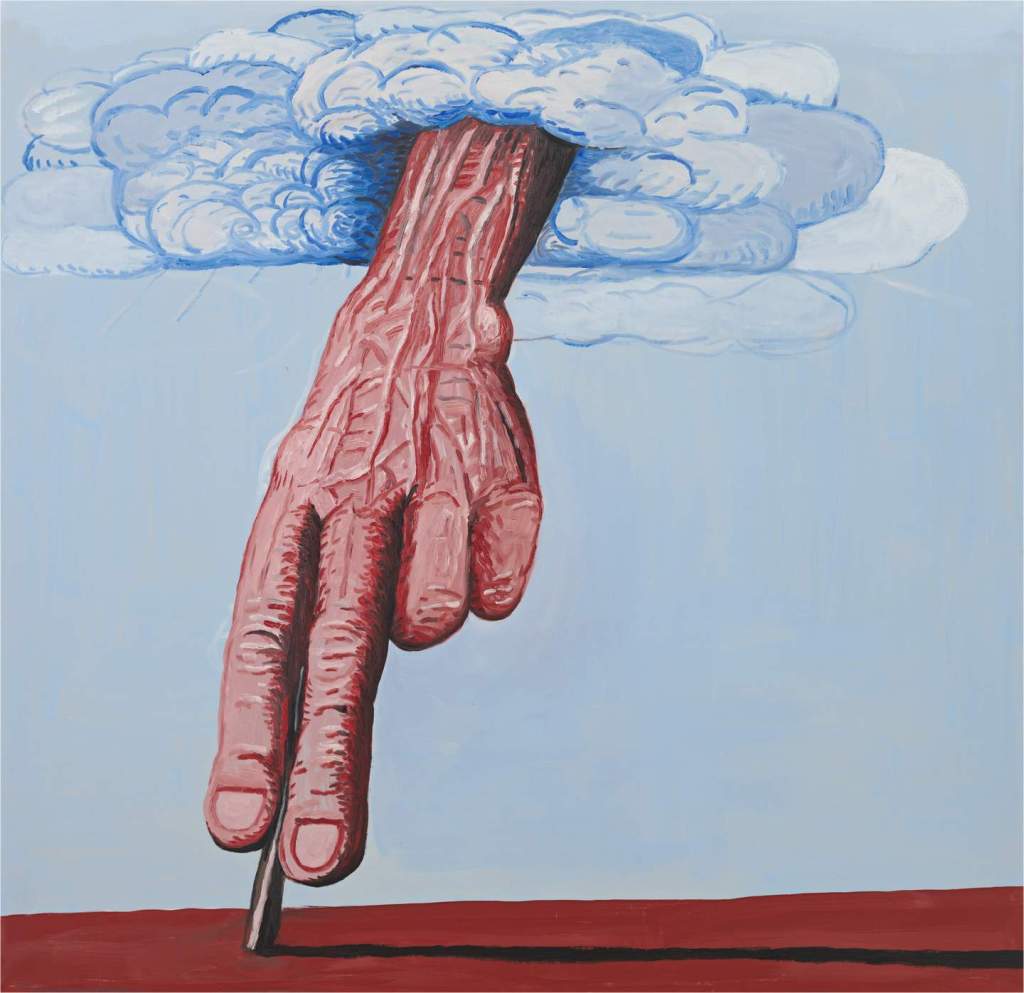
the wonderfully curated show at the Tate show us the three Philip Guston, the classically educated mural and figurative artist, the popular abstract expressionist of 1950’s and 60’s, and he extraordinary unclassifiable Guston of the last ten years of his life with his large cartoon like collection of recurring images, legs, shoes, horizons, all painted in shades of his favourite cadmium red

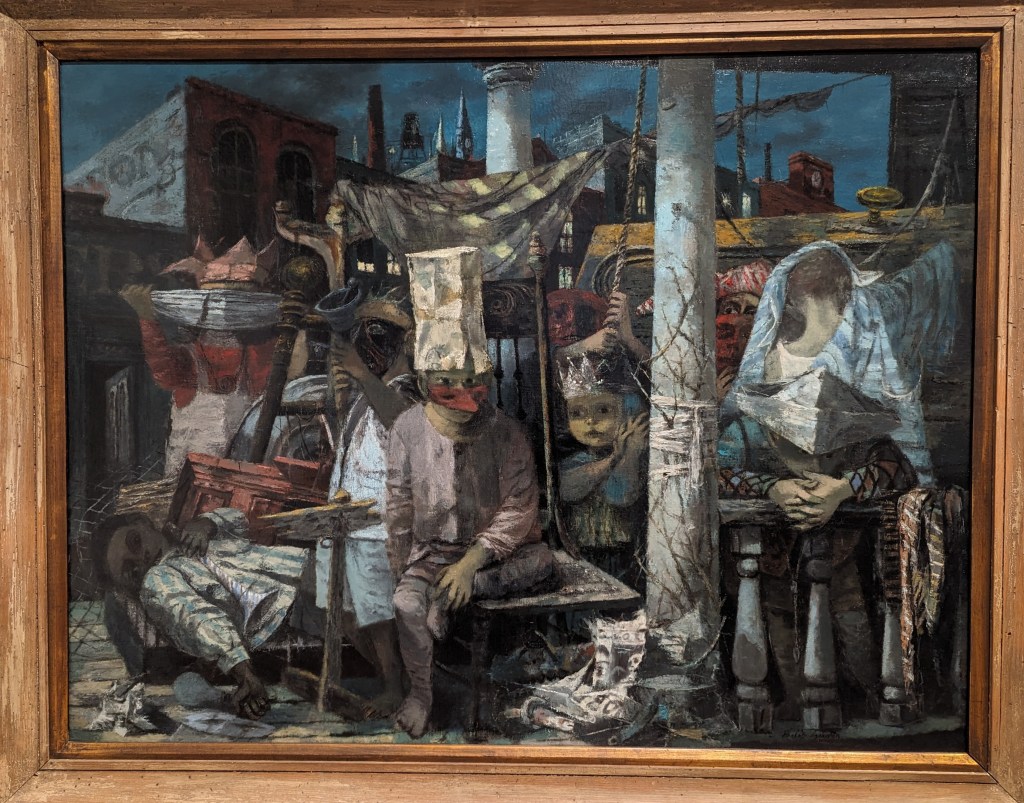
if this be not I. a beautiful painting of exhausted children in post war /post party detritus, shows Guston’s skills as a figurative artist, after years painting monumental murals in Mexico and US schools Guston turned to canvas for this powerful painting.

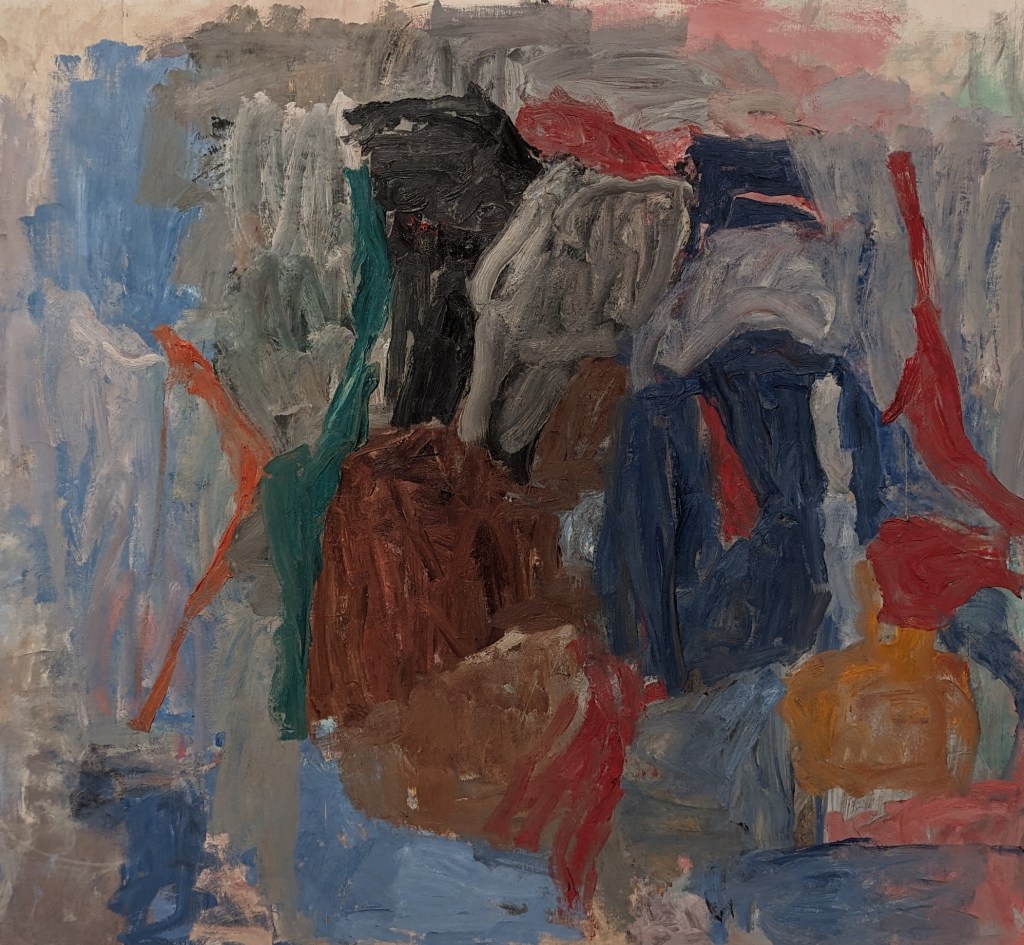
Guston followed his contemporaries into the world of abstract expressionism, where his expressive brush strokes and use of colour made him very succesful in the art world of New York in the 60s and 70s.

slowly his colours faded, became monochromatic until he started slowly thought simple line drawings

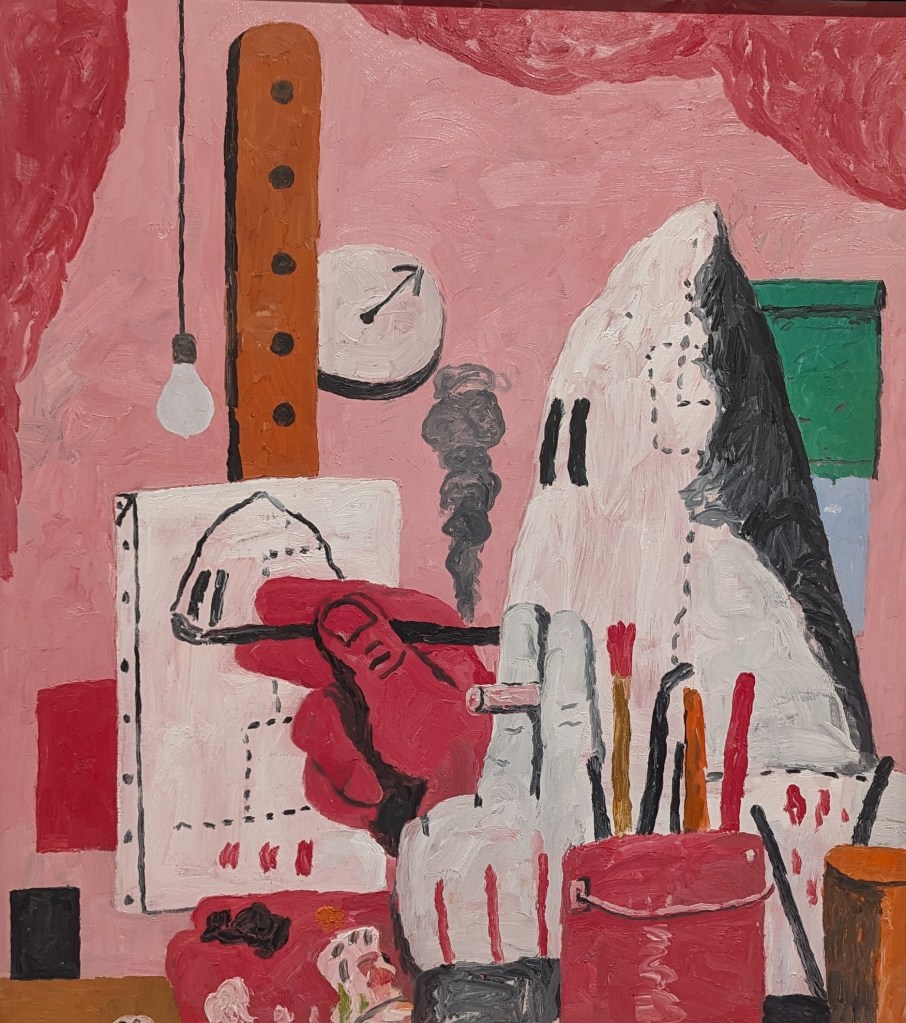
he returned to figurative painting, not in his classical style but in a loose simple line, in many of his new drawing he uses a set of repeated images, feet, shoes, hands grasping cigars, horizons, controversially he uses hooded KKK figures in comic settings, Guston appears himself as a large bullet headed cyclops, all apinted mainly in shades of his favourite Cadmium Red

He describes his painting as almost automatic, driven by the unconscious nudged by day to day preoccupations. He described artistic creation ..” I think it’s kind of like devils work… Only God can make a tree”

In describing his working…” when you start working, everybody is in your studio- the past, your friends, enemies, the art world and above all your own ideas…. But as you continue painting, they start leaving, one by one, and you are left completely alone, then if you are lucky, even you leave”…

of the three Gustons, I know which one I prefer, though I love all three

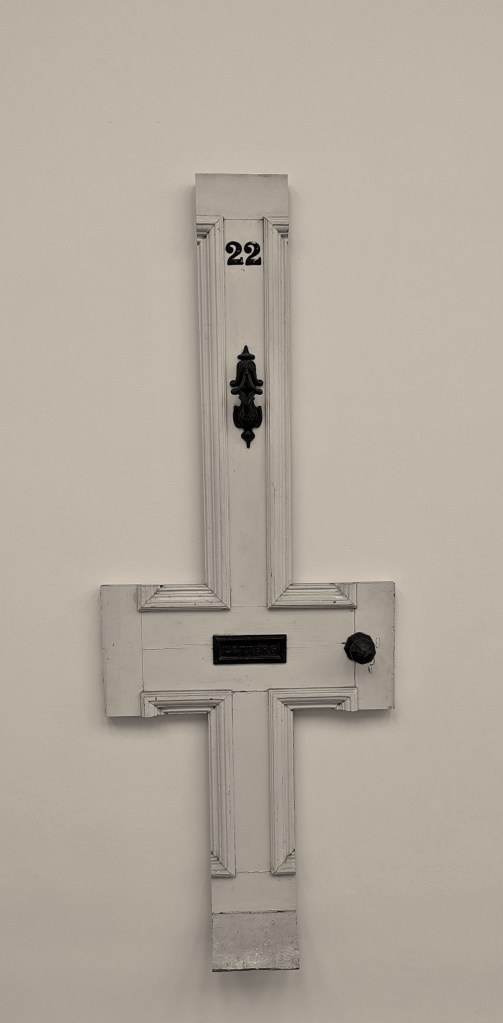
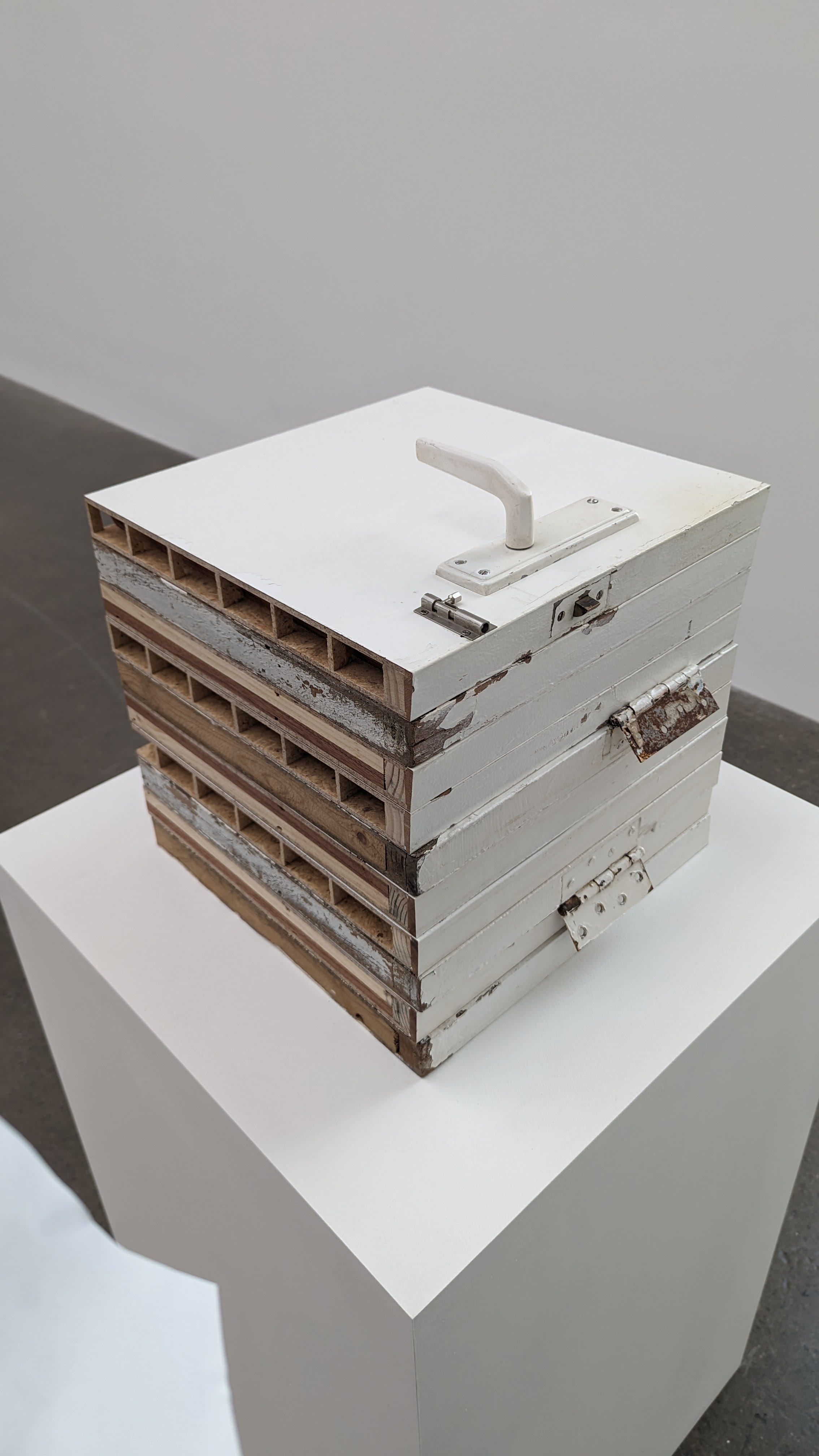
Doors: Christian Marclay

At the white cube with fellow students, I have a No22 door in Brixton, thus I especially liked this piece which is a companion to the film ‘doors’ a wonderfully crafted edit of doors, entrances and exits from french british and hollywood films.

I loved the pace of the film , going through doors finding the expected/ unexpected/ unwanted/scary/ nothing.

the star of the edit is the sound, perfectly cut to create tension. I loved all the fragments, playing at identifying actors, styles, films, and so wanting to know what they all discovered on the other side of the door

I also had a lot to think about the market in non fungible art, ‘Doors’ must be a formidable expensive piece to make, I cant believe the sale of books and the few chopped up doors shown upstairs in the White Gallery covers the cost of the film.

i didnt think about identity at all in the White Cube

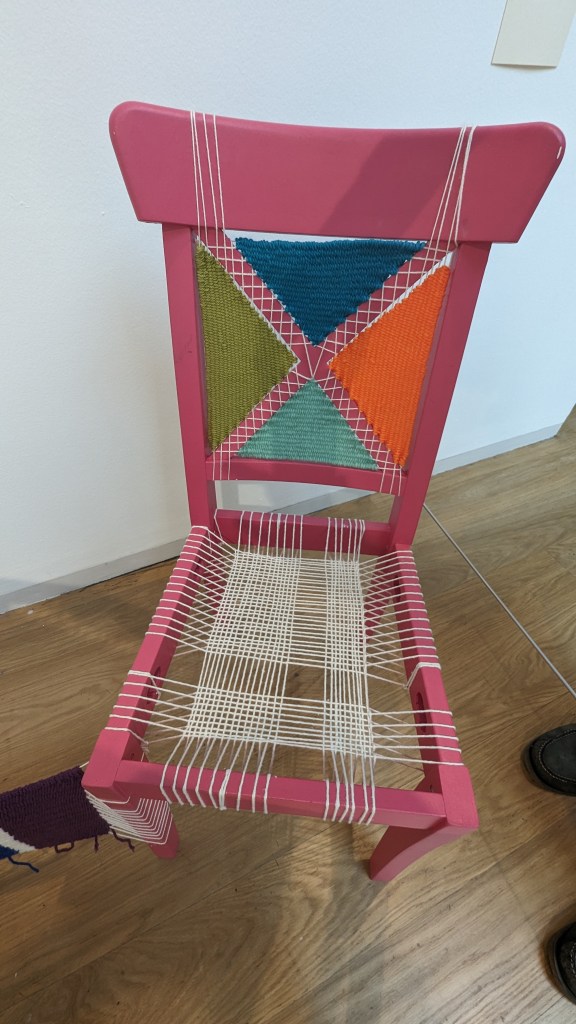
It all begins with a thread

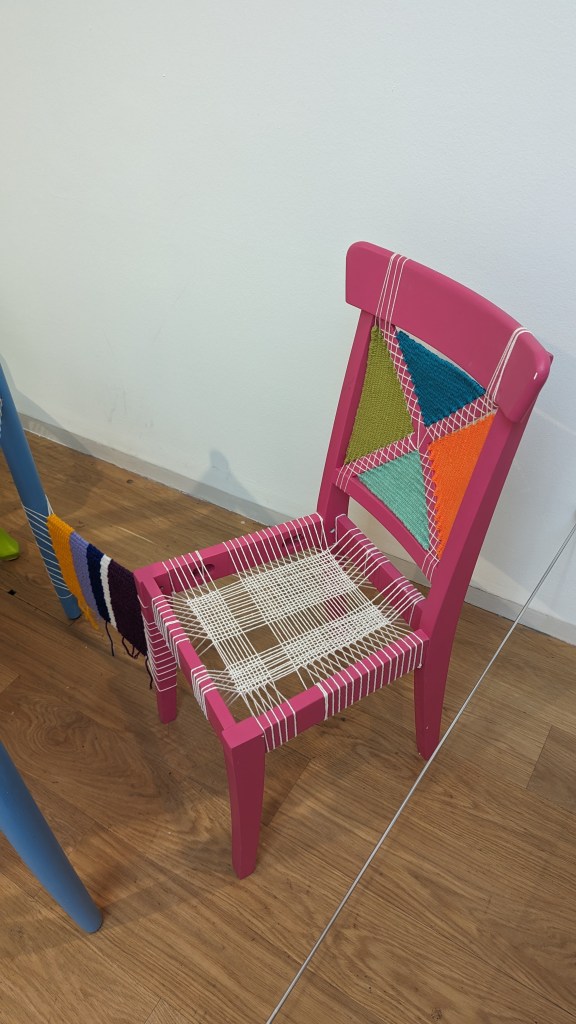
Art or craft, why produce an ugly unusable chair
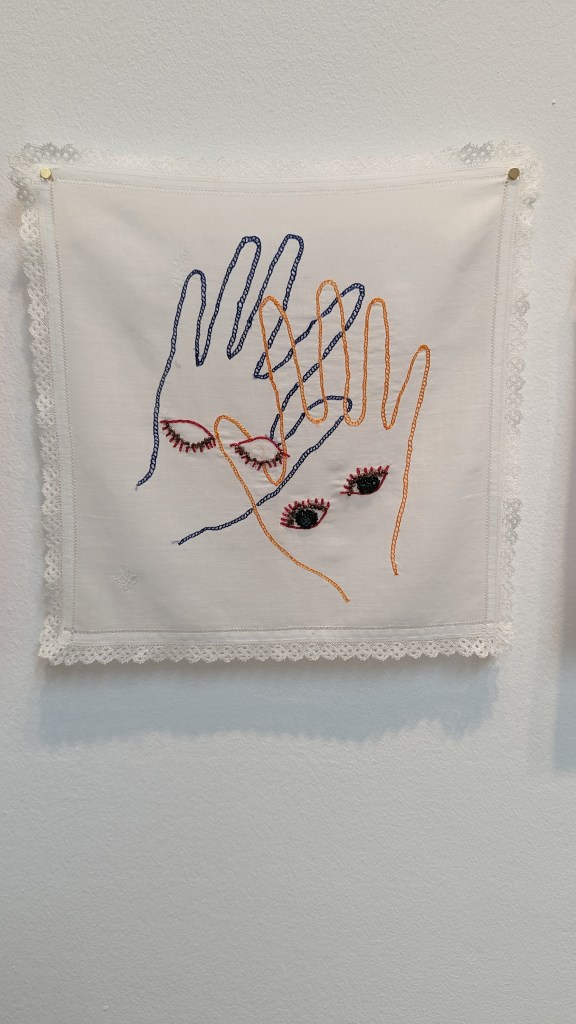
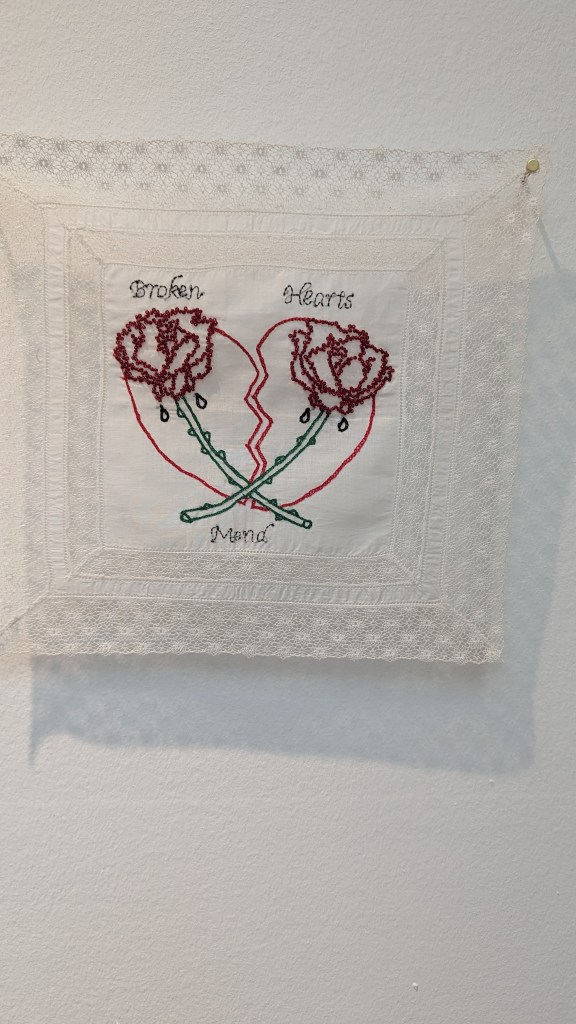
From a collection of handkerchiefs
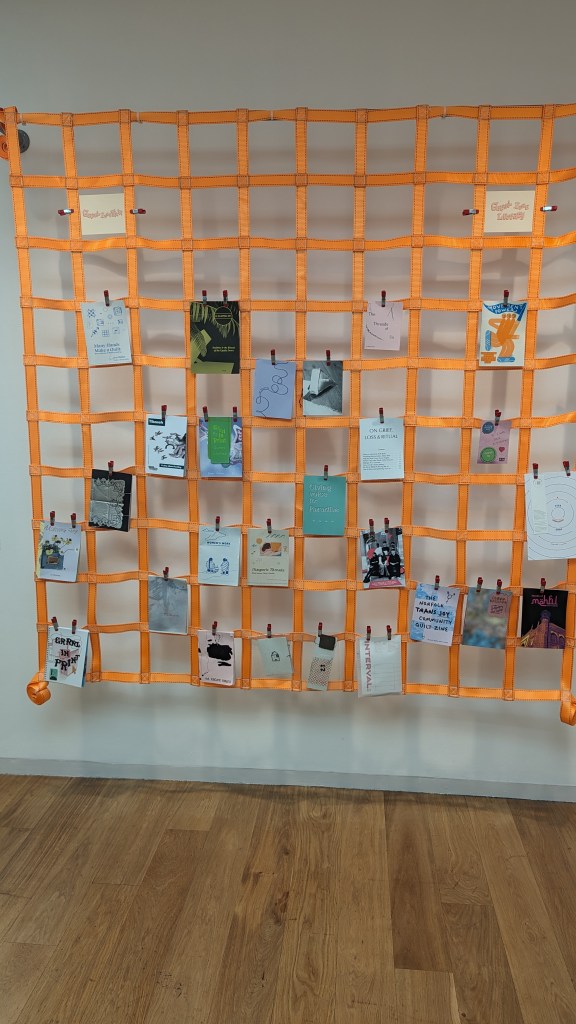
Not sure if this was serious
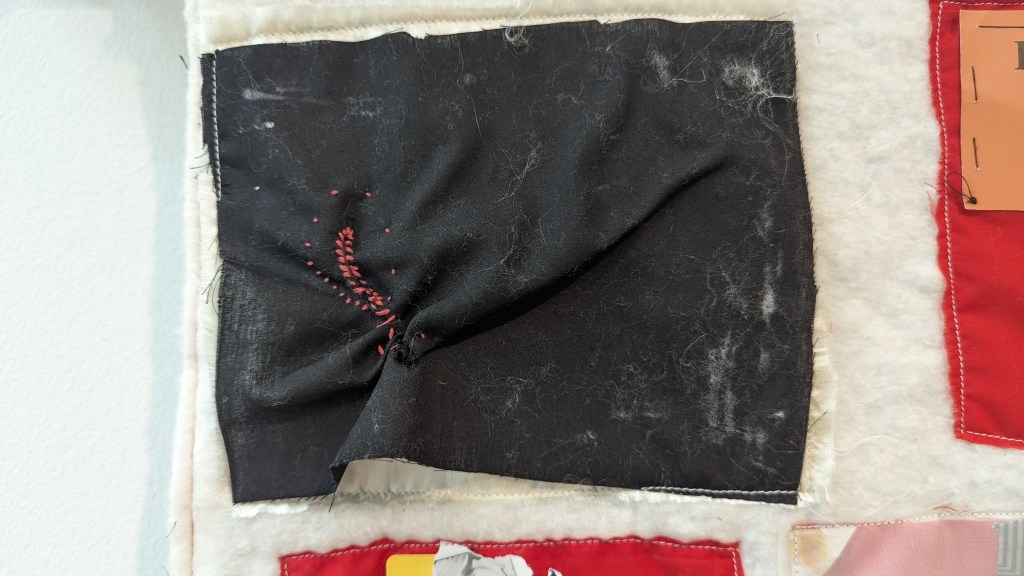
The best piece of ‘art’ in the show, a panel in a pedestrian quult,
A handkerchief, good for bodily fluids we were told in the explanation
Why not try a bit harder and make it comfortable