
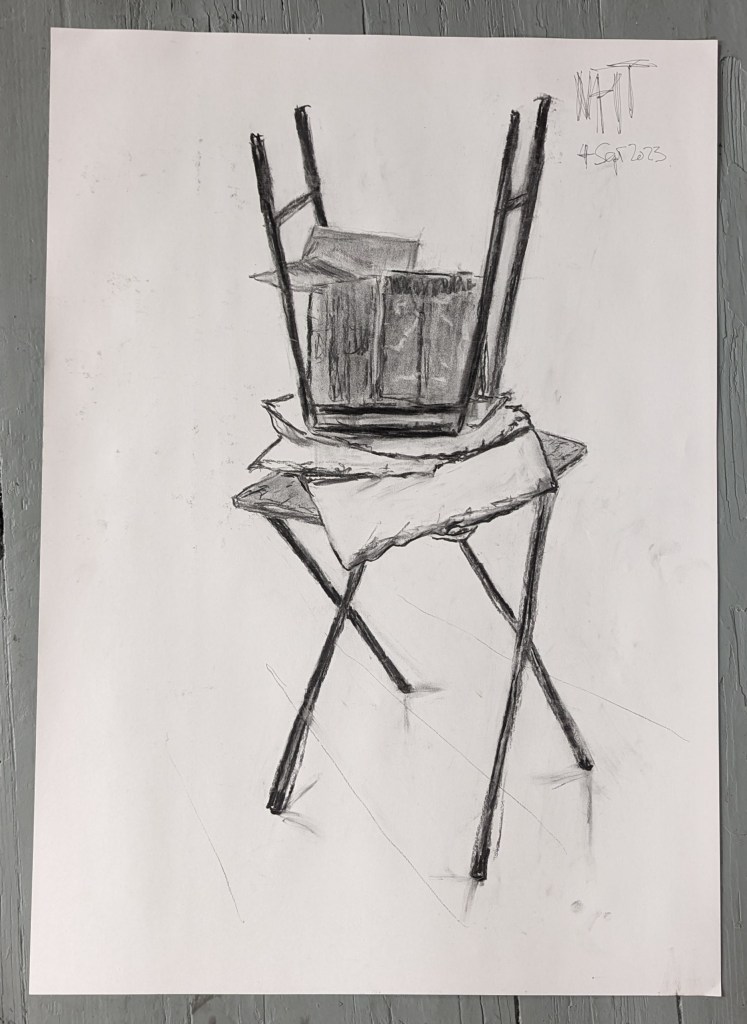
Furst day drawing exercise
a friend working in the theatre advertised for a ‘theatre facilitator’. the first cover letter she opened. said … paragraph one…. I am a gender fluid, mixed heritage, mentally disabled facilitator……..
so intersting that these days instead of advertising one’s skills ,talents, work history and positivity when applying for a job… the applicant advertises the baggage they carry with them. Don’t we all have gender identity crises, jewish grandparents, a stutter when stressed, but in my generation we dealt with it in a different less harmful way, and applied for jobs listing our strengths, not laying out all the problems that we carry with us.
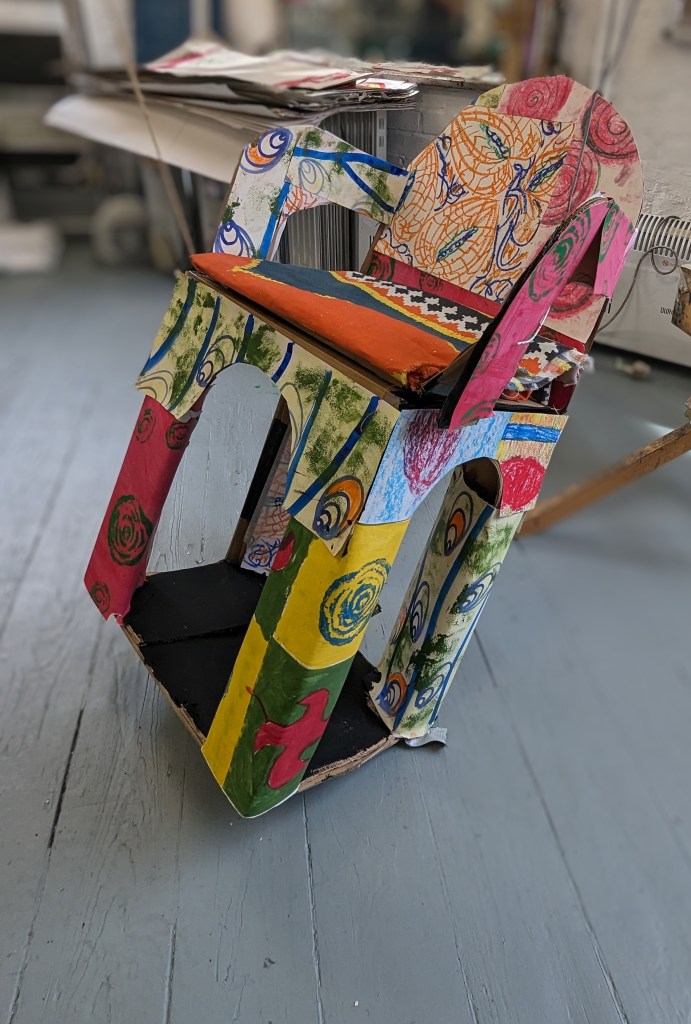
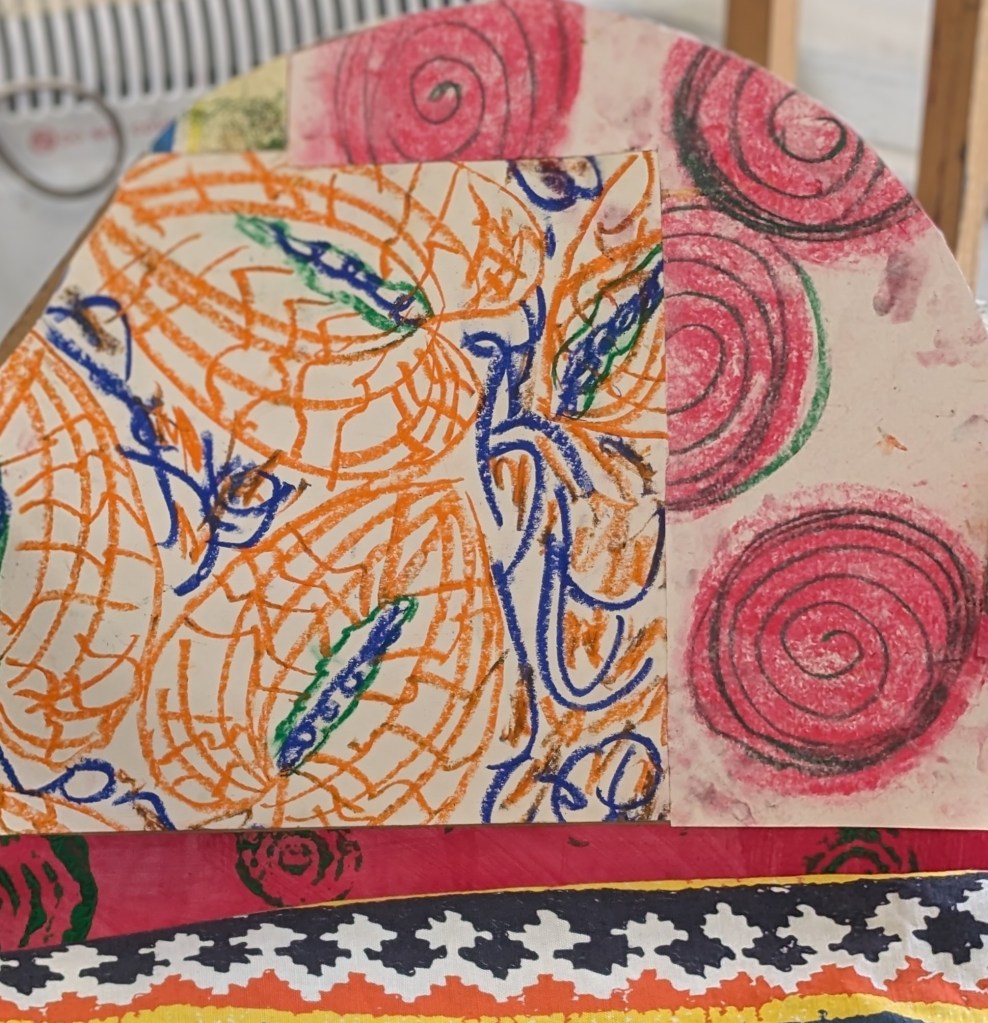
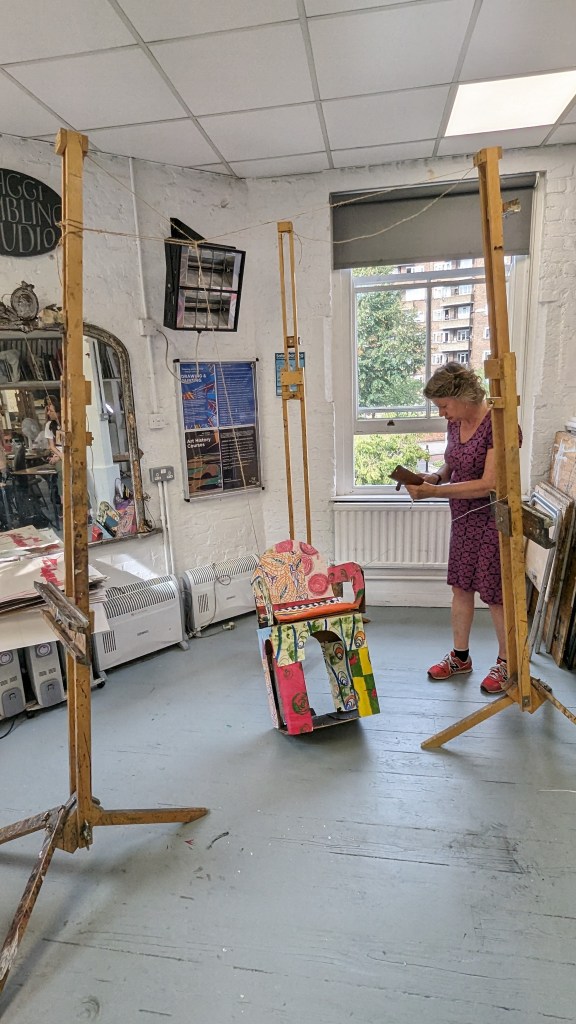
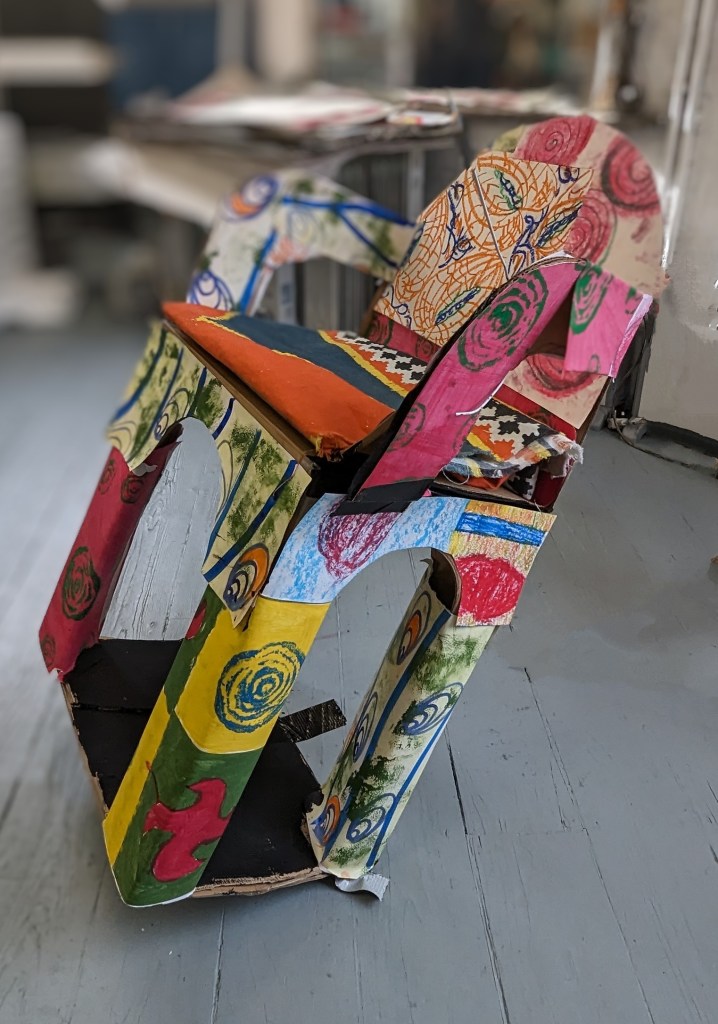
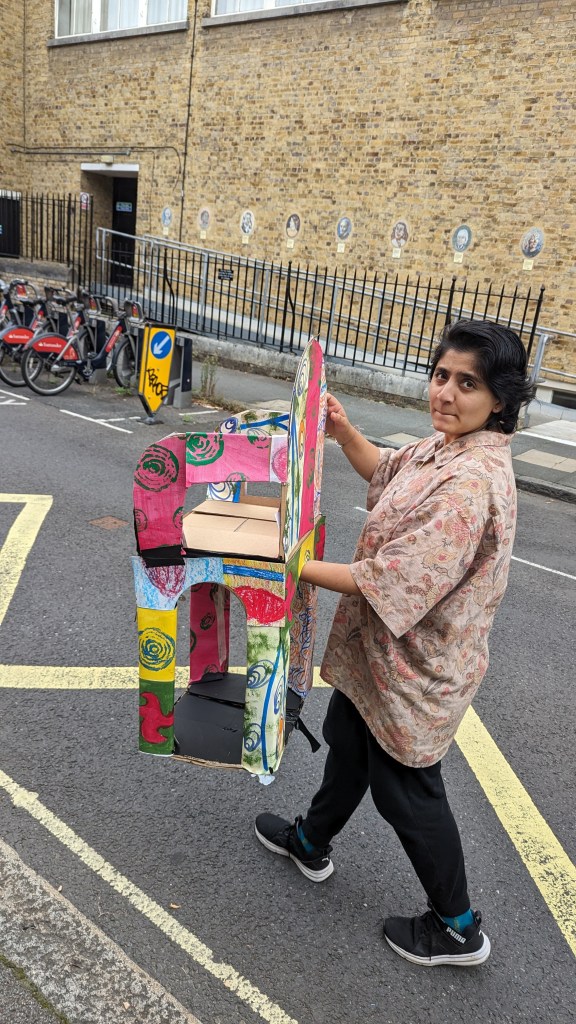


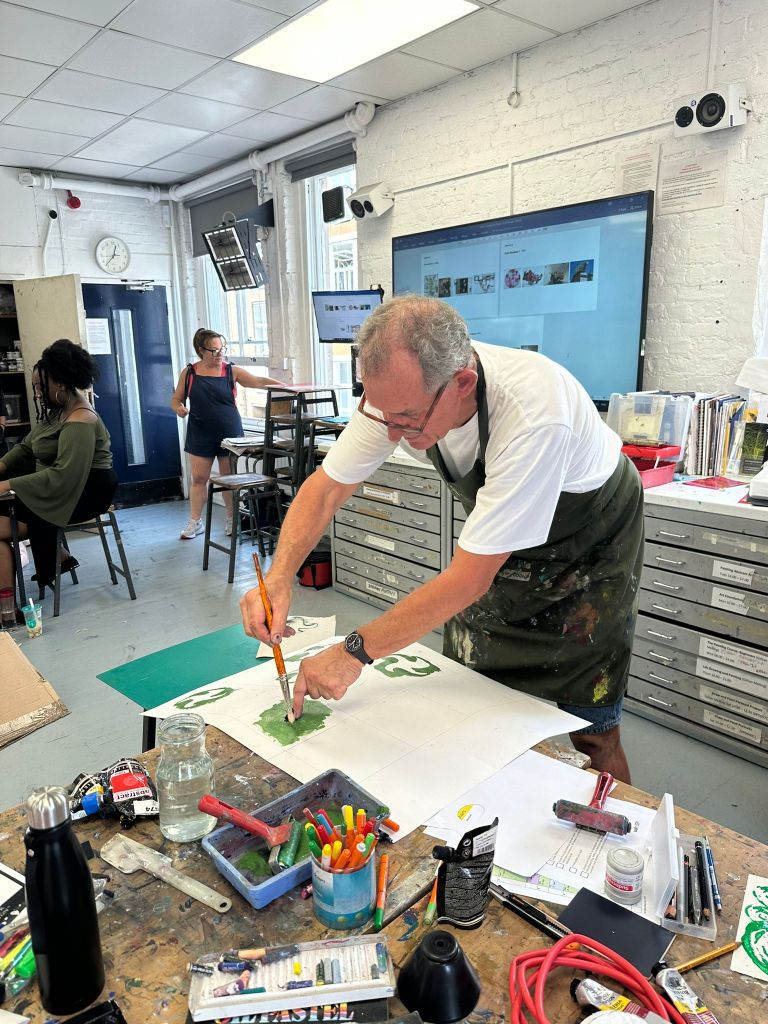
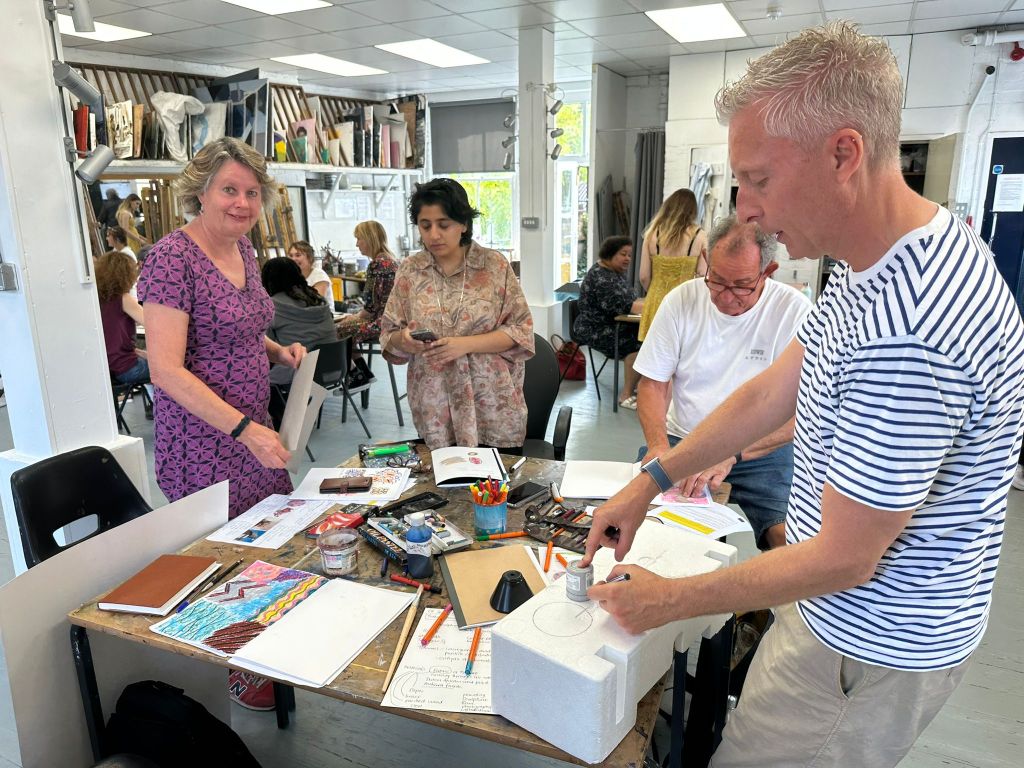


isabel, Andi, Catherine, Sana and i make fabric and cover the chair, two boxes make an excellent chair
Reflections posted on teams, my first attempt, interesting none of the images in the essay copied
Yinka Shoniabre a British Nigerian artist, is well established in the UK and internationally recognised. Probably most well-known for‘Nelson’s ship in a bottle’ an installation on the 4th Plinth in Trafalger Sq.
Shoniabre sculptural works are finely executed, with a fine and lightly humorous take on serious subjects. In almost all of the work, West African ’lost wax’ Batik prints appear. Sometimes the fabrics are sourced commercially or, like, Nelson’s ship specially printed.
Our group of five were tasked to produce a 3d ‘chair’ inspired by Shoniabre. We had an excellent discussion, we all knew of some of Shonibare’s work, one of the group had expert knowledge of the work and was helpful in guiding the discussion. It was easily decided to fabricate a chair and ‘upholster’ it in our own versions of west African prints. We made our designs in different ways, with a good idea of the styles and palate of West African prints. Sana and I went ‘dumpster diving’ and found some perfect boxes in a nearby bin.
The discussion of the chair, its appearance and message was very clear. My experience of West Africa I made the points: traditionally in the country people sat on the ground, tribal chiefs had a stools as symbols of authority. These days the most common chair in Nigeria is a plastic garden chair. In many of Shonibare’s work the characters are off balance, or uneasily balanced on chairs or single wheels. We chose to have the chair tilted backwards in an optimistic but dangerous way, a chair not easy to sit on, but not a chief‘s stool
We worked on our fabric designs, one was painted, two drawn with wax crayon, one printed with a clever use of a bit of polystyrene we got from the bin, I tried stencilling in a repeat pattern
Fortunately, the boxes were perfect to fabricate a chair, one for the legs, the otherfor the curved back and legs in the form of a garden chair, We divided our tasks, I was keen to fabricate the chair with Sana, the other three started on the upholstery and erecting three easels to suspend the work.
We finished in the time given and produced a very attractive chair, colourful, poignent and with some significance in its ‘off balance’ state.
It was with some sadness that we took it back to the bin.
We learnt many lessons in group endeavour, I believe we all felt significantly invested in the project without jealously or feeling the pressure of our peers, it was a true collaborative process The fabric, designing and making was very creative and we all learnt from each other’s ides, I finished off my time-consuming stencil with polystyrene printing.
I found that designing and fabricating the chair was
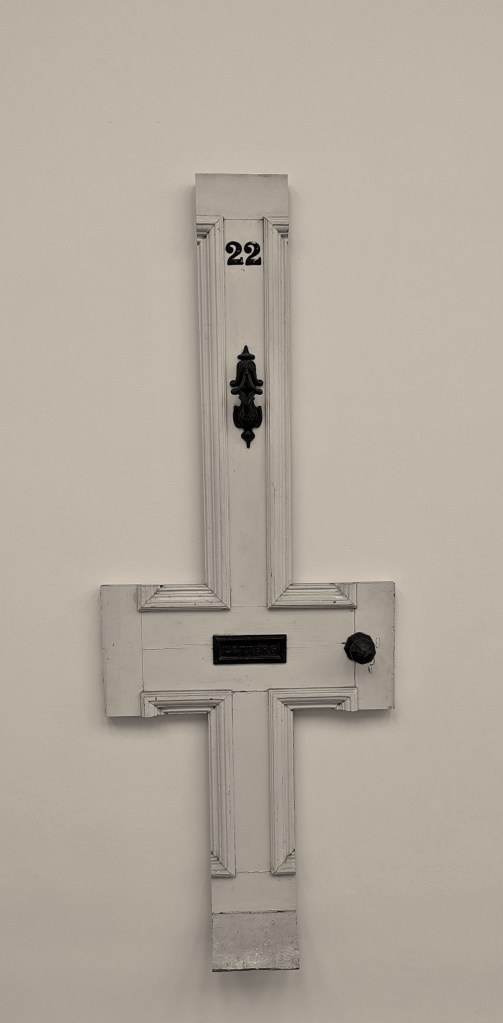
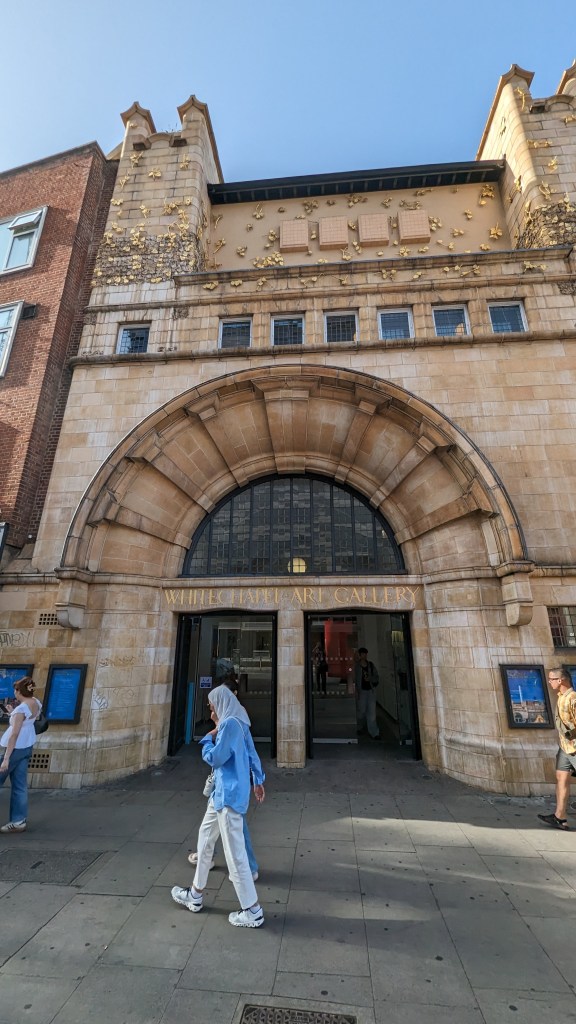
At the white cube with fellow students, I have a No22 door in Brixton, thus I especially liked this piece which is a companion to the film ‘doors’ a wonderfully crafted edit of doors, entrances and exits from french british and hollywood films.
I loved the pace of the film , going through doors finding the expected/ unexpected/ unwanted/scary/ nothing.
the star of the edit is the sound, perfectly cut to create tension. I loved all the fragments, playing at identifying actors, styles, films, and so wanting to know what they all discovered on the other side of the door
I also had a lot to think about the market in non fungible art, ‘Doors’ must be a formidable expensive piece to make, I cant believe the sale of books and the few chopped up doors shown upstairs in the White Gallery covers the cost of the film.
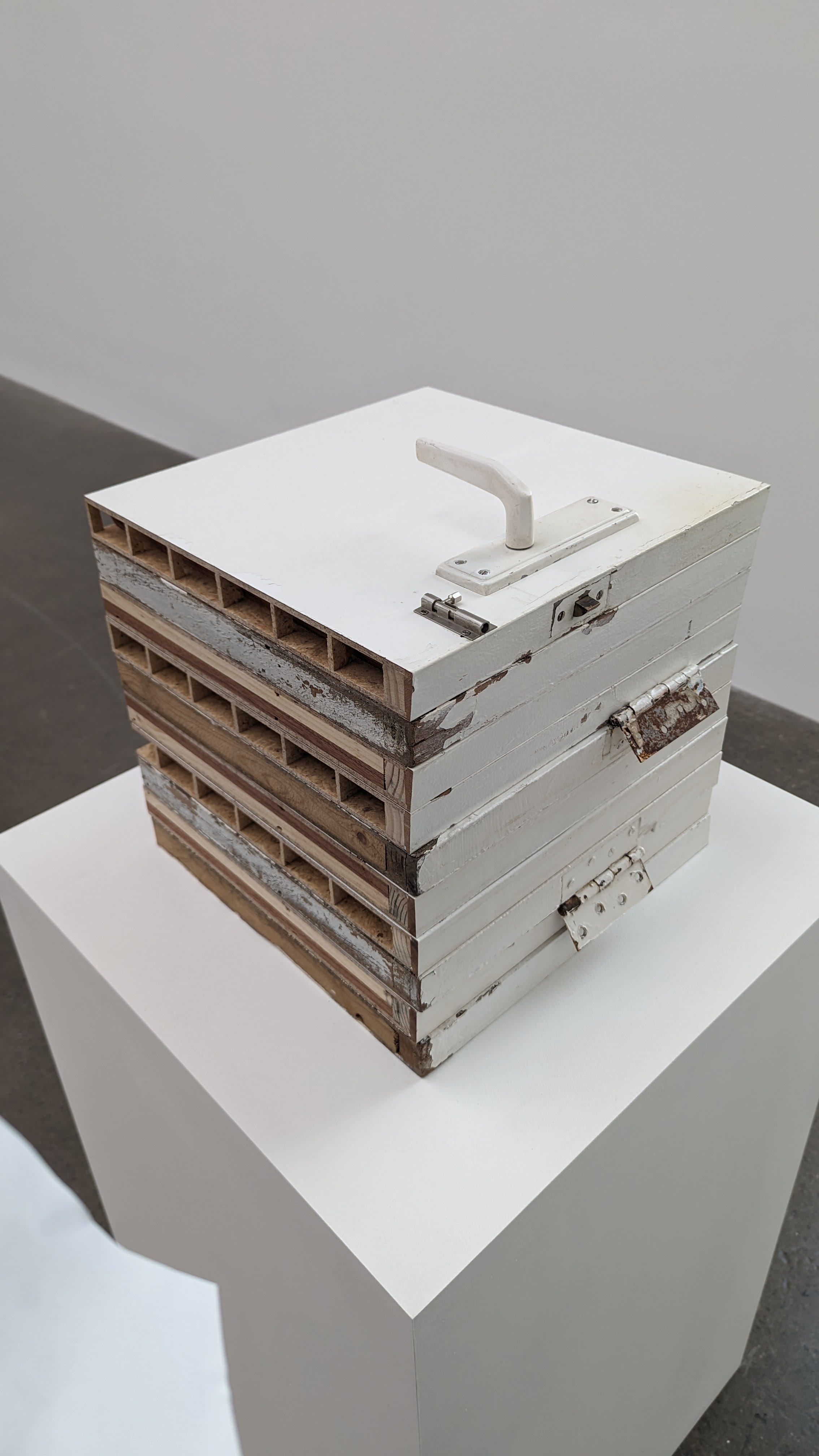
i didnt think about identity at all in the White Cube


 Nicholas Turner Morley Art Foundation